

Art hurts. Art urges voyages - and it is easier to stay at home.
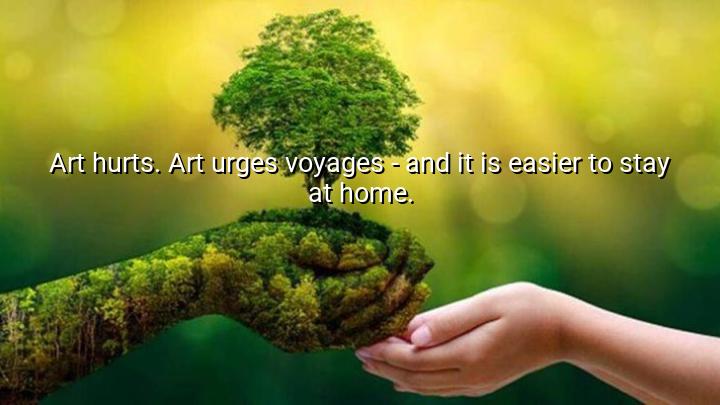




The quote "Art hurts. Art urges voyages – and it is easier to stay at home" by Gwendolyn Brooks speaks to the emotional and transformative power of art. Brooks, an acclaimed American poet, suggests that engaging with art can be a painful, yet necessary, process. Art often forces the creator and the audience to confront difficult emotions, uncomfortable truths, and the complexities of human experience. It requires vulnerability and introspection, which can be challenging but ultimately lead to growth and understanding.
Brooks also highlights the idea that art urges individuals to take voyages, not just in the literal sense but in a figurative way. Art compels us to venture into new emotional, intellectual, and cultural territories. It pushes us to explore unfamiliar ideas, perspectives, and experiences. These voyages can be daunting, as they often require stepping out of one’s comfort zone. However, the temptation to "stay at home" represents the ease and safety of avoiding the discomfort that comes with exploring the deeper, more complex aspects of life and the human condition.
The quote reflects the tension between the comfort of the familiar and the transformative power of art. While it is easier to remain in a place of emotional or intellectual safety, art calls us to take risks and explore the unknown. This journey, while often painful, can lead to greater self-awareness and understanding of the world around us. For Brooks, art is a call to action, urging us to leave the comfort of our familiar surroundings and venture into new emotional and intellectual realms.
Ultimately, Brooks’ quote emphasizes the dual nature of art—it is both a source of discomfort and a catalyst for growth. By engaging with art, we embark on voyages that challenge us to face difficult truths, yet these challenges are essential for personal and collective progress. Art, in its most profound form, disrupts the status quo, pushing us to expand our boundaries and rethink our understanding of the world.

TTDuong Thi Thuy Trinh
Art as an invitation to journey—whether internal or external—resonates with me. But is art’s pain a necessary part of growth, or is it something we impose on ourselves in order to justify the struggle? When Brooks says it’s easier to stay home, is she saying we often take the easy way out of confronting deeper issues? Does great art always require a struggle to understand, or can it simply provide comfort or peace?
HYDuong Ha Hoang Yen
Brooks' quote suggests that art is a transformative force that pushes us to take risks, yet it acknowledges the comfort of staying home. Does this mean that art should always challenge us? Can art also have moments of ease or beauty, or is its true power in its ability to make us uncomfortable? Is it possible to truly experience art without feeling some form of emotional discomfort or tension?
L6Tran Tan Phat Lop 6/4
Art being painful and urging voyages really captures the paradox of creation. If it’s easier to stay at home, why do artists continue to create even when it hurts? Is it that the pain of creating is just part of the process, or is it that art offers something greater in return for the discomfort? How do you reconcile the discomfort art brings with the satisfaction of creating something meaningful?
HLHai Li
I’ve always thought of art as a form of self-expression, but this quote suggests that it’s also an invitation to confront discomfort. Does this mean that the best art is often the most challenging, the kind that pushes us out of our familiar spaces? And if art urges us to travel—either physically or emotionally—does that mean we should actively seek art that challenges us, even if it causes discomfort?
HNThi Hau Nguyen
Art as a source of discomfort is an interesting concept. The urge to create can push us out of our comfort zones, both mentally and emotionally. But the second part of the quote, about staying at home, feels relatable—how many times do we choose to avoid discomfort? Is it that we resist art's invitation because of its emotional demands? Or does the comfort of staying home simply feel more secure than venturing into the unknown?