

Architecture is a art when one consciously or unconsciously creates aesthetic emotion in the atmosphere and when this environment produces well being.
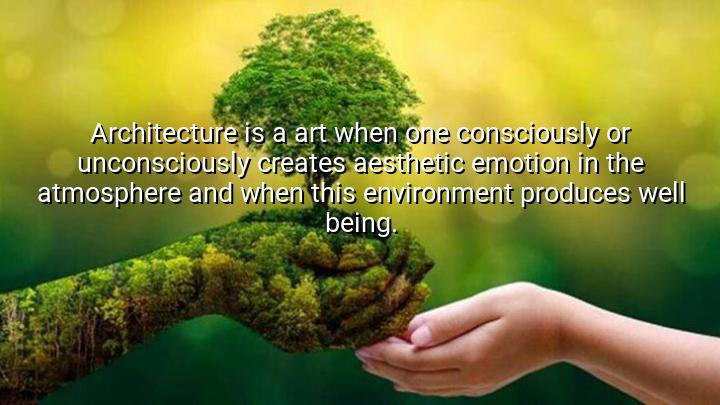




Luis Barragán’s quote, "Architecture is an art when one consciously or unconsciously creates aesthetic emotion in the atmosphere and when this environment produces well being," explores the idea that architecture is not just about constructing buildings, but about evoking emotional responses and creating a sense of well-being. Barragán emphasizes that true artistic architecture goes beyond functionality; it should be designed with the intent to affect the emotions of those who experience it. Whether through careful planning or instinctive design, architecture has the power to create environments that nurture both the body and the spirit.
The phrase "aesthetic emotion" refers to the feelings that a space can evoke, such as tranquility, inspiration, or awe. Barragán believed that a well-designed space could have a profound impact on a person’s mood and mental state. By crafting spaces that are visually stimulating and harmoniously designed, architects can trigger positive emotional reactions in people, leading to a sense of comfort and emotional satisfaction.
Barragán also highlights that well-being is a crucial outcome of architecture. It’s not enough for a space to look beautiful; it must also foster a sense of peace and comfort for its inhabitants. His own architectural works, such as the Casa Estudio Luis Barragán in Mexico City, reflect his philosophy of creating spaces that promote emotional balance and personal reflection. Barragán’s use of light, color, and materiality was intended to cultivate an atmosphere that nurtures the human spirit.
Ultimately, Barragán’s quote underscores the belief that architecture is not just a physical science but a form of art that affects the soul. It is a medium that, when executed thoughtfully, has the power to elevate the human experience by creating environments that not only serve functional purposes but also enhance emotional and psychological well-being.

HYNguyen Thi Hai Yen
Barragán’s take blurs the line between architecture and other sensory arts like music or painting. If buildings can evoke emotion and well-being, does that make architects emotional storytellers in a spatial medium? I’m intrigued by the idea of architecture as an immersive emotional experience, not just a shelter or a statement. What’s the role of light, sound, or materials in crafting that feeling? Are we paying enough attention to those elements?
NHNgan Ha
I love the poetic dimension of this quote, but I’m curious—how does it apply to public architecture, like government buildings or transit hubs, which are often designed for function over form? Can those kinds of environments still produce aesthetic emotion and well-being? Or is Barragán speaking more to residential and cultural architecture, where the intention to evoke feeling is more permissible or expected?
DHLe Dung Han
This makes me want to re-evaluate the spaces I spend time in every day. Are they supporting my well-being, or just serving a utilitarian purpose? Barragán’s view seems to ask more of architecture than we typically expect. Do you think most people even notice or value the emotional atmosphere of a space, or has that sensitivity been dulled by decades of cost-cutting and standardization in construction?
BKDang Huu bao Kha
Reading this quote, I was struck by how Barragán emphasizes both conscious and unconscious creation. Can beauty and emotional resonance in architecture really happen unconsciously? It’s fascinating to think that a space could impact our mood or mental health without the designer intentionally aiming for that. Should architectural education place more focus on emotional literacy, not just technical or historical knowledge?
LDLinh Dang
I find this quote both inspiring and challenging. If architecture becomes art through the creation of aesthetic emotion, how do we measure that emotion? Isn’t the experience of beauty or well-being incredibly subjective? What makes one space universally comforting while another feels sterile or oppressive? It makes me wonder how architects balance their creative instincts with the unpredictable nature of human response.