

We learn from our gardens to deal with the most urgent question of the time: How much is enough?
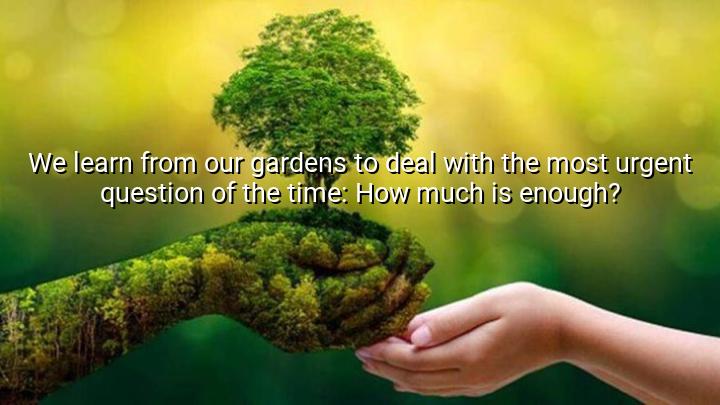




The quote by Wendell Berry, "We learn from our gardens to deal with the most urgent question of the time: How much is enough?" invites reflection on the concept of sufficiency and the value of living within one's means. Berry suggests that tending to a garden teaches an important lesson about balance—in nature, there is no need for excess. The question "How much is enough?" is a challenge to our modern, consumer-driven world, encouraging us to reconsider what truly matters and to embrace a mindset of moderation and sustainability. In a garden, growth occurs at its own pace, and the act of cultivating it requires patience, attention, and understanding of what the plants truly need to thrive, not more than that.
Berry’s statement also emphasizes that gardening offers profound life lessons. When we care for a garden, we begin to recognize the importance of limits and the natural rhythms of life. A garden doesn’t require endless resources, and overindulgence can harm the plants. Similarly, in our lives, there is wisdom in knowing when we’ve attained enough—whether it’s in terms of material wealth, success, or personal satisfaction. This lesson about sufficiency extends beyond the garden into human behavior, prompting a reevaluation of our desires and what it means to live meaningfully.
The quote also underscores the broader theme of sustainability, both in gardening and in life. Gardening, in its most thoughtful form, encourages a relationship with the earth that respects the environment and avoids excess. By recognizing that plants need only what is necessary for their growth, we learn to question the pressures of consumerism and focus on the essentials—what is truly needed rather than what is simply desired.
The origin of this quote lies within Wendell Berry's writings, where he often explores themes of nature, simplicity, and sustainability. As a farmer, poet, and environmental activist, Berry has long advocated for a return to simpler, more mindful ways of living in harmony with the land. This quote reflects his belief that true wisdom can be found in the humble practices of gardening, where the quest for enough is both a personal and ecological journey.

AAdministratorAdministrator
Welcome, honored guests. Please leave a comment, we will respond soon