

I come into the peace of wild things who do not tax their lives with forethought of grief... For a time I rest in the grace of the world, and am free.
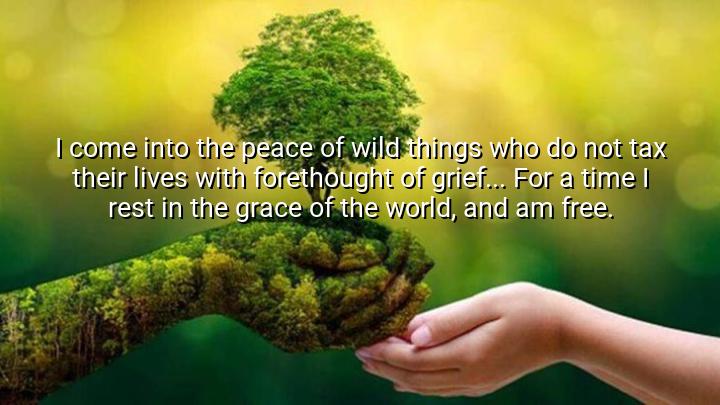




The quote "I come into the peace of wild things who do not tax their lives with forethought of grief... For a time I rest in the grace of the world, and am free" by Wendell Berry, an American poet and environmental activist, expresses the peace and freedom that come from embracing the natural world. Berry reflects on how wild things—animals and nature—live in the present, unburdened by worry or future grief. Unlike humans, who often carry the weight of past and future concerns, these creatures experience life more simply and authentically.
Berry contrasts the natural, spontaneous existence of wild creatures with the human tendency to overthink and anticipate future problems. In this, he finds solace. The idea that wild things do not "tax their lives" with the heavy burden of forethought speaks to the mental and emotional toll of constantly worrying about what might happen. Instead, by observing these creatures, Berry finds a sense of relief, a temporary escape from the anxieties that often dominate human life.
The phrase "rest in the grace of the world" signifies a moment of peace and rejuvenation that comes from reconnecting with nature. For Berry, this grace represents the harmony and simplicity of the natural world, offering a form of restoration for the weary mind. In this connection, he experiences a brief but profound freedom from the complexities and stresses of life.
Ultimately, this quote encapsulates Berry's view that spending time in nature can provide a sense of freedom and mental clarity, offering a space where one can escape the weight of modern existence. It is a call to embrace the present moment and to find peace in the natural world, where the burden of worry and grief is absent, and where one can experience true rest and grace.

AAdministratorAdministrator
Welcome, honored guests. Please leave a comment, we will respond soon