

When the flower blooms, the bees come uninvited.
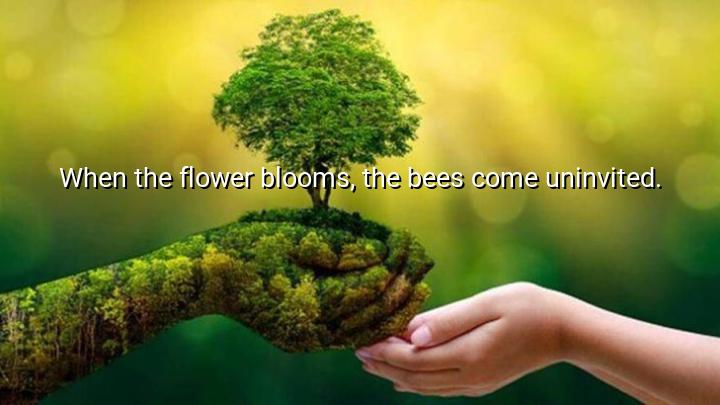




In this quote, Ramakrishna uses the image of a blooming flower and the arrival of bees to convey a deeper philosophical message about attraction and natural law. The phrase "when the flower blooms" symbolizes moments of personal growth, beauty, or success, while the bees represent those who are drawn to that growth or beauty, often without invitation or expectation. The message suggests that when something positive or admirable comes into existence, others will naturally be attracted to it, sometimes even without being invited.
Ramakrishna’s quote also speaks to the idea of uninvited attention. Just as the bees are drawn to the flower's nectar, people are often attracted to others' success, talents, or good qualities. This could refer to how fame, success, or personal growth can attract both positive and negative attention, with no control over who is drawn to it. The flower's blooming represents a natural process, while the bees are a natural consequence of that process, highlighting how success often brings unexpected attention.
The origin of this quote lies in Ramakrishna's teachings, which often used metaphors from nature to illustrate deeper spiritual or philosophical insights. Ramakrishna, a 19th-century Indian mystic and spiritual leader, frequently drew on the natural world to communicate truths about human nature and the divine. This particular metaphor uses the simple imagery of a flower and bees to convey the universal law of attraction and the inevitability of attention in the face of growth and beauty.
Ultimately, Ramakrishna’s quote reminds us that growth, whether personal, spiritual, or professional, naturally attracts attention—both welcome and unwelcome. It teaches us that the process of blooming or achieving success is often accompanied by the presence of others who may seek to be close to it, sometimes regardless of intention or invitation. The message invites reflection on how we handle attention and how we balance personal growth with external influences.

AAdministratorAdministrator
Welcome, honored guests. Please leave a comment, we will respond soon