

We gave up some of our country to the white men, thinking that then we could have peace. We were mistaken. The white man would not let us alone.
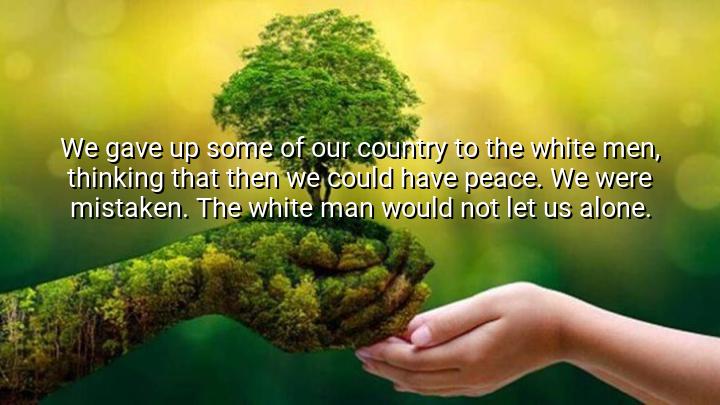




The quote "We gave up some of our country to the white men, thinking that then we could have peace. We were mistaken. The white man would not let us alone." by Chief Joseph reflects the disillusionment and betrayal felt by Native Americans, particularly the Nez Perce tribe, after agreeing to cede their lands to the U.S. government. Chief Joseph expresses how his people believed that by surrendering part of their territory, they would be able to live in peace with the settlers, but their hopes were dashed when the U.S. government continued to encroach on their land and way of life. This speaks to the broken promises and the unrelenting pressure faced by Native Americans during westward expansion.
Chief Joseph’s words highlight the sacrifice his people made in hopes of securing their sovereignty and peace. However, they soon realized that giving up their land was not enough to satisfy the demands of the U.S. government or the settlers, who continued to encroach on Native territories. The white men, in this context, represent the colonizing force that disregarded Native American rights and sovereignty, pushing them further into conflict and hardship.
The phrase "the white man would not let us alone" underscores the relentlessness of colonial expansion and the injustice faced by Native Americans. Despite attempts at peaceful coexistence, the settlers and the government continued to infringe on Native lands, leading to ongoing violence and resistance. Chief Joseph’s reflection is a poignant reminder of the suffering caused by colonization and the broken treaties between Native tribes and the U.S. government.
The origin of this quote comes from Chief Joseph, the leader of the Nez Perce tribe, known for his role in resisting U.S. military forces during the Nez Perce War of 1877. Chief Joseph’s legacy is one of courage, leadership, and a deep commitment to protecting his people and their way of life. His words are a powerful statement about the betrayal and false promises Native Americans endured during a time of displacement and cultural destruction.

ALMinh Anh Le
This quote prompts me to think about the broader patterns of colonization and displacement worldwide. How do similar experiences compare across different Indigenous peoples and contexts? Understanding these shared struggles might foster global solidarity and support for Indigenous rights movements today.
DDLe Duc Dat
Chief Joseph’s statement makes me reflect on the emotional toll of losing land and autonomy. How do communities cope with such profound loss, and what forms of healing are possible? It also leads me to consider the role of storytelling and remembrance in preserving cultural identity and resistance.
NNNghi13 Nghi
Reading this, I’m struck by the persistence of injustice despite attempts at compromise. How might Chief Joseph’s experience inform contemporary discussions on negotiation and peace-building with marginalized groups? Does this history suggest that peace cannot be achieved without genuine respect and equity? It’s a powerful reminder of the consequences of ignoring these principles.
PUNguyen Le Phuong Uyen
This quote raises questions about trust and betrayal in historical relationships between Native Americans and settlers. What lessons can we learn about the importance of honoring agreements and respecting cultural differences? It also makes me think about how narratives like Chief Joseph’s challenge dominant historical perspectives and highlight voices often marginalized in history.
NQNguyen tran nhu quynh
Chief Joseph’s words reflect a tragic and deeply frustrating history of broken promises. How does this sentiment resonate with ongoing issues faced by Indigenous communities today regarding land rights and sovereignty? It’s heartbreaking to consider how attempts at peace were met with continued encroachment. I wonder how acknowledging this history can inform efforts toward reconciliation and justice now.