

I hope that no more groans of wounded men and women will ever go to the ear of the Great Spirit Chief above, and that all people may be one people.
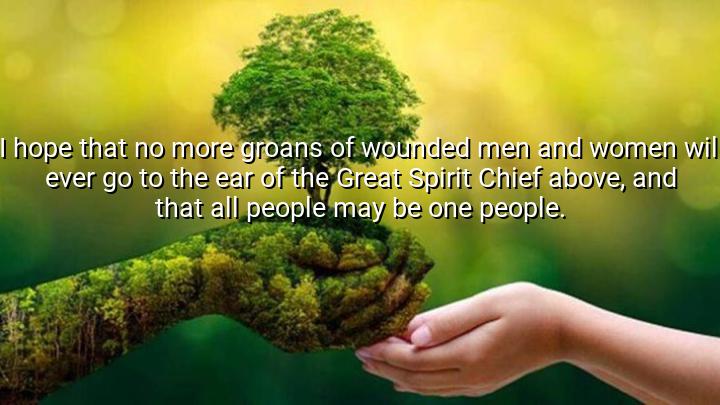




The quote "I hope that no more groans of wounded men and women will ever go to the ear of the Great Spirit Chief above, and that all people may be one people" by Chief Joseph, a leader of the Nez Perce tribe, expresses his deep desire for peace and unity. In this statement, he is voicing his wish for an end to the suffering caused by war and conflict, particularly for his people, who endured immense hardship during the forced relocation by the U.S. government. The use of the word groans evokes the painful physical and emotional toll of violence, while the mention of the Great Spirit Chief symbolizes a higher power overseeing the well-being of all.
This quote reflects Chief Joseph’s commitment to peace, reconciliation, and the preservation of his people's dignity. After leading his tribe in a heroic retreat from the U.S. Army, he famously surrendered in 1877, stating that he was tired of fighting and that he wanted his people to live in peace. His words here reflect the emotional and spiritual depth of his leadership, as he expresses a wish not just for the end of war, but for the unification of all people, regardless of race or background.
The origin of this quote can be traced to the period after Chief Joseph's surrender, when he became a symbol of Native American resilience and the struggle for justice. Despite the immense suffering his people endured, he remained committed to the values of peace and humanity, urging both his own people and others to see each other as equals. His plea for all people to be "one people" echoes his vision of a world where tribal conflicts, racial divisions, and historical injustices no longer cause harm.
Ultimately, Chief Joseph’s words are a poignant reminder of the power of forgiveness and unity. He hoped that the future would be free from the hatred and violence that had marred the lives of his people, and that all individuals, regardless of their heritage or background, could live in harmony as one human family under the guidance of the Great Spirit Chief.

AAdministratorAdministrator
Welcome, honored guests. Please leave a comment, we will respond soon