

We do not exist for ourselves alone, and it is only when we are fully convinced of this fact that we begin to love ourselves properly and thus also love others.
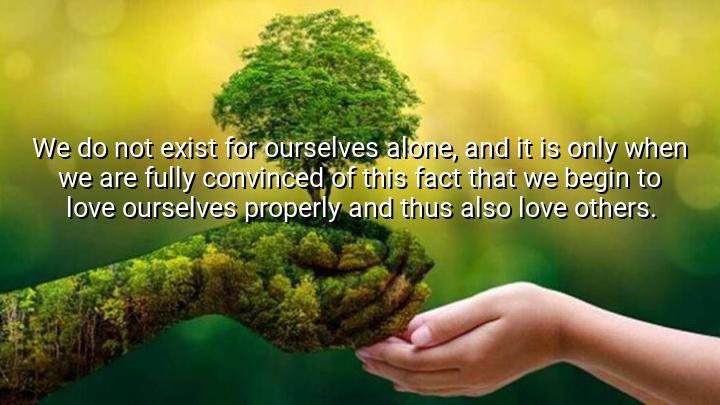




The quote "We do not exist for ourselves alone, and it is only when we are fully convinced of this fact that we begin to love ourselves properly and thus also love others" by Thomas Merton emphasizes the interconnectedness of self-love and love for others. Merton, a Trappist monk, theologian, and writer, believed that understanding our place in the world and recognizing that we are not isolated beings is key to developing true self-love. By acknowledging that our existence is part of a larger community or society, we can better understand our worth and cultivate healthy relationships with others.
Merton suggests that true self-love is not about self-centeredness or ego but rather about understanding that we are part of something greater than ourselves. It’s through this recognition that we begin to accept and appreciate our own identity, which in turn allows us to offer love and compassion to others. This perspective aligns with the idea that love is not just something we give to ourselves or receive from others, but it is a reciprocal flow rooted in understanding our role in the world.
Additionally, the quote speaks to the importance of humility and service. Once we realize that we exist for more than just our personal gain or comfort, we begin to see the value in connecting with and supporting others. This shift in perspective leads to a deeper and more genuine way of loving both ourselves and those around us, moving beyond superficial interactions to more meaningful and empathetic connections.
Ultimately, Merton’s quote highlights the profound truth that love is interconnected. By truly understanding our own place in the world, we are better able to love ourselves authentically and, in doing so, extend that love to others. This idea encourages a life of self-awareness, compassion, and community, where love flows outward from a place of personal acceptance and humility.

A9Kim Anh 9/3
Merton’s quote makes me think about love as an ecosystem. When we act like we exist in isolation, everything else starts to unravel—relationships, community, even self-esteem. But when we see ourselves as part of something interconnected, love flows more naturally. Still, how do we balance this with healthy boundaries? How do we stay open to others without losing ourselves in the process?
TTThu Trang
This quote brings up a fascinating paradox: that we learn to love ourselves not by focusing inward, but by understanding our outward responsibilities. That’s so different from a lot of modern self-help advice. I wonder—can you truly feel at peace with yourself if your relationships and sense of purpose in the world are out of sync? Maybe connection is the foundation we’ve been missing all along.
MTNguyen Minh To
There’s something incredibly humbling about this idea. It suggests that fulfillment and identity aren’t just internal—they’re deeply relational. But I do wonder, in practical terms, how do we cultivate this mindset in a society that idolizes the 'self-made' person? Is there a way to teach this kind of moral interdependence early, so people grow up seeing their lives as meaningful parts of a greater whole?
MNNgoc Thien 1 Mam Non
I love how this quote ties self-worth to something bigger than the self. It makes me reflect on how often we think of personal development as a solo journey, when it might actually depend on how we relate to others. Could it be that genuine self-esteem is nurtured through empathy and service rather than introspection alone? That’s a radical but beautiful thought.
TNLinh Nguyen Thi Ngoc
Merton’s words strike a spiritual chord. The idea that understanding our role in a larger community is the gateway to loving ourselves is profound. But I’m curious—how does someone who feels deeply isolated begin to internalize this? If love of self is linked to love of others, what happens when trust or connection has been broken? Is healing possible without first feeling part of something greater?