

There are two types of poor people, those who are poor together and those who are poor alone. The first are the true poor, the others are rich people out of luck.
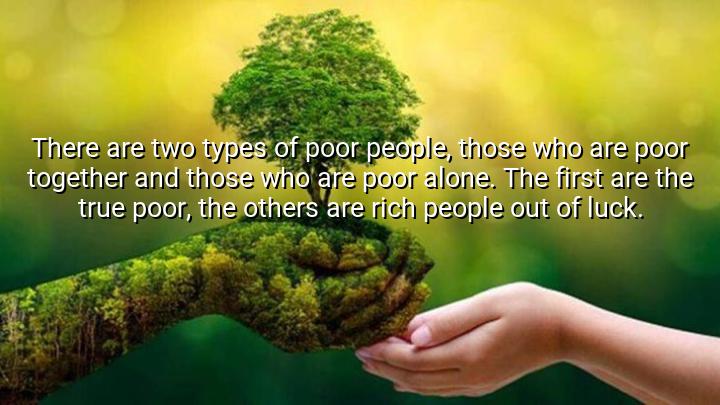




The quote "There are two types of poor people, those who are poor together and those who are poor alone. The first are the true poor, the others are rich people out of luck." by Jean-Paul Sartre explores the social and psychological dimensions of poverty. Sartre, a French philosopher known for his contributions to existentialism, draws a distinction between two types of poverty: one that is experienced collectively, and the other that is faced in isolation. In this context, poverty together refers to those who share the hardships of poverty as a community, supporting and understanding one another’s struggles, while poverty alone describes individuals who face deprivation without the benefit of community or support, often feeling isolated and disconnected.
Sartre’s quote emphasizes the human connection that can transform the experience of poverty. He suggests that the true poor are those who experience poverty as a shared experience, where the solidarity of being poor together creates a sense of belonging and shared purpose. In contrast, those who are poor alone may have the material absence that comes with poverty, but they lack the emotional and social resources that come from being part of a community. For Sartre, the former group experiences the full impact of poverty on their identity, whereas the latter are merely unlucky, facing the same material deprivation but without the deeper social and existential consequences of true poverty.
The quote also reflects Sartre's broader existential philosophy, where he often focused on individual freedom, choice, and the meaning people create in their lives. Sartre’s distinction between the true poor and those who are merely unlucky touches on the idea that poverty is not just an economic condition but also a social and emotional one. The shared struggle of being poor together can offer a form of empowerment and solidarity, while the isolation of being poor alone can deepen the alienation and despair experienced by individuals.
Ultimately, Sartre’s quote challenges us to rethink poverty as more than just a lack of resources. It invites us to consider the importance of community and solidarity in overcoming adversity. The idea that true poverty is experienced in the company of others underscores the value of shared experience and mutual support, which can provide a sense of dignity and meaning, even in the face of hardship.

TTPham Thi Thuy
This makes me question how society perceives and treats these two types of poverty. Are those ‘poor together’ more visible or politically mobilized, while those ‘poor alone’ remain invisible or stigmatized? How can awareness of this distinction inform social justice efforts? It’s a thought-provoking lens on economic disparity and social cohesion.
KKhanhIDOL
I wonder if this quote reflects Sartre’s existentialist view on identity and situation. Being ‘poor together’ might mean embracing a shared reality that shapes collective identity, while ‘poor alone’ could suggest a disconnection from one’s community or self. How does this tie into broader existential themes of belonging, freedom, and authenticity?
NVThanh nguyen van
This statement makes me think about the psychological impact of poverty. Is being ‘poor alone’ more isolating and damaging because it lacks community support? How does social context affect a person’s resilience or despair when facing economic hardship? Sartre’s words push us to consider poverty beyond numbers, encompassing relationships and identity.
TBLe Tuyet Bang
Could this quote be highlighting the importance of solidarity and shared experience in defining what it means to be poor? Perhaps ‘poor together’ suggests a community bonded by circumstances, while ‘poor alone’ reflects alienation. How might this distinction influence policies aimed at poverty alleviation? It invites reflection on whether economic assistance should consider social factors alongside material needs.
UCMy Uyen Cao
I’m intrigued by the idea that some who are poor ‘alone’ are actually ‘rich people out of luck.’ Does this imply that poverty is not just about current financial status but about social connections and history? How does this perspective challenge common narratives about poverty? It also makes me question the role of luck versus structural inequality in determining someone’s economic fate.