

The happiness of one's own heart alone cannot satisfy the soul; one must try to include, as necessary to one's own happiness, the happiness of others.
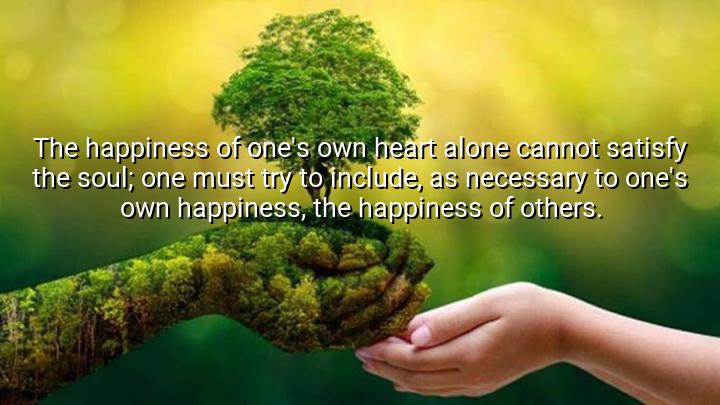




The quote "The happiness of one's own heart alone cannot satisfy the soul; one must try to include, as necessary to one's own happiness, the happiness of others" is from Paramahansa Yogananda, a revered Indian yogi and spiritual teacher. Yogananda is known for his teachings on self-realization and the unity of all people. In this statement, he emphasizes the interconnectedness of human beings and suggests that true happiness is not solely derived from one's own emotional well-being but is deeply tied to the happiness of others.
Yogananda implies that the soul cannot be truly content if it is solely focused on selfish desires. While personal happiness is important, it is not complete without considering the well-being of others. He encourages individuals to expand their sense of fulfillment beyond personal gain and recognize that compassion, kindness, and empathy toward others are essential for a deeply meaningful life.
The idea presented here reflects the spiritual principle that one’s journey to inner peace is incomplete without contributing to the greater good. Yogananda’s teachings often revolved around finding a balance between personal growth and serving others, fostering a sense of community and collective harmony. By focusing on the happiness of others, individuals can elevate their own happiness and experience a more profound sense of contentment.
In essence, this quote highlights the importance of selflessness and compassion in achieving lasting happiness. Yogananda’s message suggests that only when we consider the happiness of others as part of our own can we achieve a sense of fulfillment that nurtures the soul.

QQuyen
This quote sounds inspiring, but it also makes me think about people who struggle with their own happiness first. If someone is dealing with depression or trauma, is it fair—or even possible—to ask them to focus on others’ joy? Should this philosophy come with the caveat that self-healing may need to happen before one can authentically include others in their happiness?
SNSang Nguyen
What strikes me most is the spiritual undertone—that the soul itself craves connection beyond individual pleasure. Is Yogananda suggesting that our nature is inherently collective rather than self-centered? That’s a profound shift from modern philosophies that promote personal fulfillment above all. I’d love to explore whether cultures that emphasize community happiness report higher emotional well-being than individualist societies.
TDVan Cap Tien Dung
This makes me reflect on how interconnected we really are. The idea that happiness isn’t complete unless it’s shared challenges the way many people are taught to pursue joy—through personal milestones or private achievements. Could this be the root of why some people feel unfulfilled even after reaching their goals? Maybe true satisfaction has more to do with contribution than accomplishment.
TDVu Tam Dieu
I find this quote beautiful but also idealistic. In practice, can people genuinely include the happiness of others as part of their own without expecting something in return? It feels noble, but I’m curious if this level of selflessness is sustainable long-term. Does it risk creating emotional exhaustion, especially for caregivers or empaths who already tie their wellbeing to others?
PATran Phuong Anh
This quote resonates deeply with me, especially in a world that increasingly emphasizes self-care and individual success. It reminds me that personal joy often feels hollow if others around us are suffering. But I wonder—how do we balance this idea without losing ourselves in the process? Can we truly make others’ happiness ‘necessary’ to our own without becoming emotionally dependent or overwhelmed by their struggles?