

Solitude is the strength of being alone. It's where we become our best company.
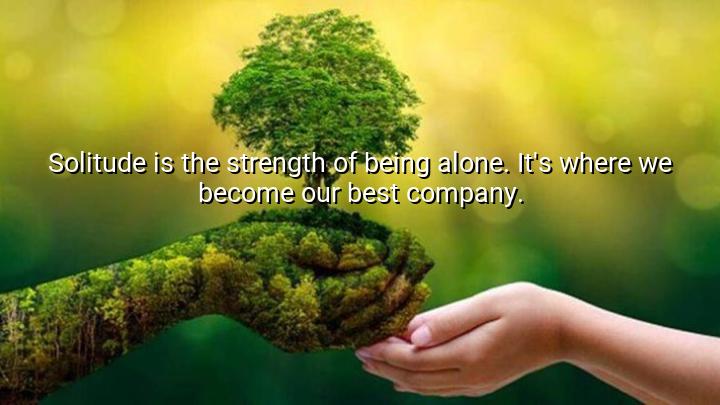




In this quote, Jay Shetty emphasizes the positive aspects of solitude and the power that comes from spending time alone. He suggests that being alone is not necessarily a negative experience, but rather a source of strength. Solitude, when embraced, offers an opportunity to connect with oneself and reflect on personal growth. Shetty’s words suggest that in moments of solitude, we can find clarity, focus, and the strength to grow as individuals.
Shetty also points out that in solitude, we have the chance to become our best company. Often, people look to others for validation or companionship, but Shetty argues that the greatest source of comfort and strength comes from within. By spending time alone, we can learn to appreciate our own thoughts, desires, and ideas, and cultivate a deep sense of self-awareness and self-reliance. This process of self-discovery is essential for personal development and emotional well-being.
The quote encourages individuals to embrace solitude as a space for personal reflection rather than something to fear or avoid. It suggests that the time spent alone is not wasted, but rather it is when we can reconnect with our inner selves and discover our true potential. In this way, solitude becomes a powerful tool for fostering inner strength and resilience.
Ultimately, Shetty’s quote celebrates the idea that being alone doesn’t have to be isolating or lonely. Instead, it can be a transformative experience, helping us become more comfortable and content with ourselves. By learning to enjoy our own company, we unlock the ability to thrive independently, with a stronger sense of self and purpose.

KVbui kha van
This statement feels both comforting and aspirational. It makes me wonder: in what ways can we actually become our 'best company'? Is it through journaling, meditation, creative work, or just sitting in silence? I’d love to explore what practices help people cultivate that sense of internal richness. If solitude is a skill, how do we strengthen it over time and make it a true source of empowerment?
BBob
I really want to agree with this quote, but part of me struggles with the idea. What if someone never learned to be alone in a healthy way? Can solitude become a place where negative thoughts grow louder instead of clearer? I think the concept is beautiful, but maybe it depends on having the right emotional tools. Should we be teaching people how to engage with solitude rather than just praising it?
NNNGA NGO
This makes me reflect on how solitude can actually enhance our relationships. If we don’t know how to enjoy our own company, how can we expect to show up fully for others? I’ve noticed that the more I value alone time, the more intentional I become in my social life. Does anyone else find that solitude helps them connect more authentically when they return to company?
MTDao Minh Tam
Jay Shetty's quote feels almost revolutionary in an era obsessed with constant connection. But does this romanticize solitude too much? Not everyone thrives in silence or stillness. Are there personality differences—like introversion vs. extroversion—that affect how we access strength in solitude? I’m curious if this idea applies universally, or if it's more of an ideal for certain temperaments.
THThinh hello
This resonates with me deeply. Solitude has helped me reflect and reset, but I’m also curious—how do we distinguish between healthy solitude and loneliness? Is it just a matter of mindset, or are there external signs that show we’ve crossed the line? I’d love to hear how others maintain that balance, especially in phases of life where alone time is either scarce or overwhelming.