

Loneliness is the poverty of self; solitude is the richness of self.
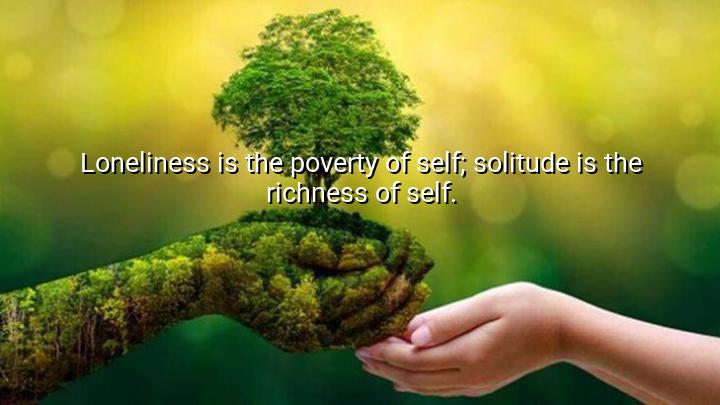




The quote "Loneliness is the poverty of self; solitude is the richness of self" by May Sarton draws a meaningful distinction between two often-confused emotional states: loneliness and solitude. According to Sarton, loneliness reflects a sense of emptiness and disconnection, where one feels deprived of emotional fulfillment and companionship. It is a state where the self feels impoverished, incomplete, or lacking.
In contrast, solitude is portrayed as a state of abundance and inner peace—a time when one is deeply connected to their own thoughts, creativity, and being. For Sarton, solitude allows the self to thrive, grow, and find meaning without depending on external validation. This kind of aloneness is not something to fear, but something to embrace as a form of personal enrichment.
May Sarton was a 20th-century poet, novelist, and memoirist whose work often focused on themes of identity, creativity, and emotional introspection. Through her writing, she explored the tension between the pain of isolation and the beauty of self-discovery. This quote, taken from her reflections on the inner life, speaks to the transformative power of being alone with oneself in a conscious, intentional way.
Ultimately, Sarton's quote encourages us to recognize the difference between feeling empty and being full in our aloneness. Loneliness arises when we are disconnected from both others and ourselves, while solitude becomes a sanctuary when we are comfortable and at peace within. It is an invitation to turn inward and discover the richness that lies within the self when given the space to simply be.

Mmin
This quote makes me think about how we’re taught to fear being alone. It's like loneliness is framed as failure, while solitude is something you earn after emotional mastery. But what if you're still figuring yourself out? Is it possible to move through loneliness toward solitude over time, or is that shift more sudden? I’d love to explore whether solitude is something we grow into, like emotional maturity.
TTThanh Truc
Sarton’s perspective makes me reflect on how solitude can be a space of healing and creativity, while loneliness often feels like a cry for connection. But I wonder, is the difference always internal? What about people who are physically isolated—can they still experience solitude as richness? Or does privilege and circumstance play a role in whether aloneness is perceived as a gift or a deprivation?
TTNguyen Le Thanh Tam
I find this quote incredibly comforting—it reframes solitude as something empowering rather than sad. But I’m left wondering, do we need to experience loneliness first to truly appreciate solitude? Maybe that contrast is what makes the richness of being alone so meaningful. Still, I think modern life, with all its distractions, makes it hard to develop that sense of self. Is solitude becoming a lost art in the digital age?
NKNguyen Kha
This feels like a poetic but challenging idea. It suggests that loneliness stems from a lack of inner fulfillment, while solitude stems from abundance. But how do we build that sense of inner richness? Is it through reflection, creativity, spirituality? And is this distinction always that clear-cut? Sometimes the line between loneliness and solitude is so thin, it feels like a mood swing. I'd love to hear how others navigate it.
TTThuy Tram Tran
May Sarton's quote offers a profound truth—but I’m curious whether it applies universally. Can solitude feel rich if someone is dealing with depression or low self-worth? In those cases, doesn’t being alone often amplify feelings of poverty rather than richness? I think the ability to embrace solitude might depend on having already cultivated a healthy relationship with oneself. What happens if that foundation isn’t there yet?