

It's better to be healthy alone than sick with someone else.
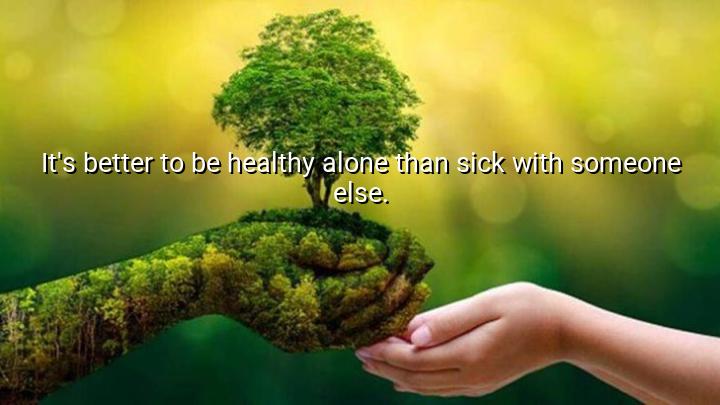




In this quote, Phil McGraw emphasizes the importance of maintaining personal well-being, even if it means being alone, rather than compromising one's health by staying in a toxic or harmful relationship. He suggests that health is the foundation of a good life, and being alone while healthy is far better than being in a relationship or situation where one's physical or emotional health is negatively impacted. The idea is that personal health should be prioritized over companionship if that companionship leads to harm or suffering.
McGraw’s words highlight the concept of self-care and the necessity of putting oneself first when it comes to maintaining health—both physical and mental. While relationships and companionship are important, they should not come at the expense of one’s well-being. If a relationship or situation is detrimental to health, it's better to face loneliness or solitude than endure the suffering that comes from being in a situation that compromises one’s health.
The quote can also be interpreted as a warning about the potential negative influence of others. Being sick with someone else might refer to being emotionally or physically drained by the people you surround yourself with. McGraw suggests that toxic relationships can negatively affect one's life, and it is better to be alone than to remain in an unhealthy dynamic.
Ultimately, McGraw’s quote promotes the idea of personal empowerment through maintaining health and well-being, even if it means facing loneliness for a time. It serves as a reminder that being in a relationship or surrounded by others is not worth sacrificing one’s own health, and prioritizing self-care is essential for living a fulfilling life.

SMNguyen Suong MAy
Is this quote empowering or isolating? On one hand, it’s a strong message about not tolerating unhealthy relationships. On the other, it kind of implies that independence is always the superior choice. But what about the people who don't have a support system—who rely on imperfect relationships for survival, emotional or otherwise? I wonder if this quote oversimplifies complex human needs under the guise of strength.
DVThanh Dat Vu
From a mental health perspective, I get this quote. But what happens when the loneliness of being ‘healthy alone’ begins to wear you down more than the toxicity of a relationship ever did? I’ve seen people thrive when they left bad relationships, but I’ve also seen loneliness become its own illness. How do we weigh the cost of solitude versus the potential of connection, flawed as it might be?
LCLe Vu Linh Chi
Isn’t it a bit harsh to imply that being with someone while going through hardship is a mistake? Life isn’t black and white—people struggle, and those struggles can happen even in great relationships. This quote feels overly individualistic. Are we becoming too quick to discard people when things get tough? Shouldn’t the strength of a bond be measured by how we face adversity together rather than just avoiding discomfort?
HNNguyen Pham Huong Ngan
This quote made me think—what defines ‘sick’ in this context? Is it literal physical illness, or emotional toxicity, codependency, or something else entirely? And what about the concept of healing through connection? It feels a bit absolutist to imply being alone is always better. Aren’t some relationships worth enduring difficulties for, if they hold long-term potential for growth? I’d love a more nuanced take on this.
K9Nguyen anh kiet 9a5
I get the point—it’s probably about avoiding toxic relationships—but doesn’t this idea risk romanticizing solitude too much? Sure, being sick with someone isn’t ideal, but isn't there value in mutual care and support through hard times? Illness doesn’t always have to isolate people. Maybe the deeper issue is distinguishing between toxic companionship and healthy vulnerability. What do you think is the balance between self-preservation and shared struggle?