

It is far better to be alone, than to be in bad company.
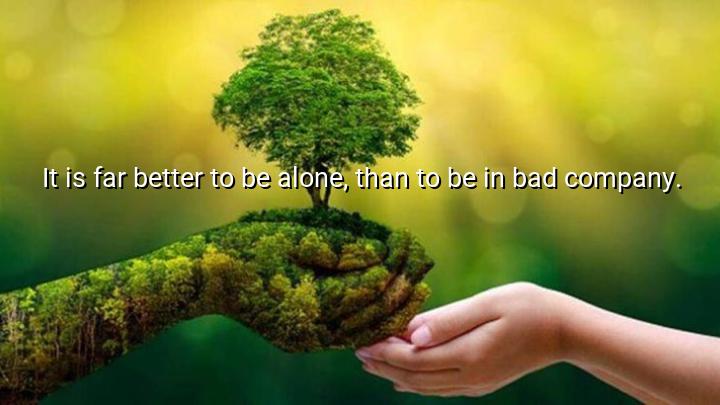




The quote "It is far better to be alone, than to be in bad company" by George Washington emphasizes the importance of choosing one’s companions wisely. Rather than surrounding oneself with negative influences, Washington advocates for the strength and integrity found in solitude. This quote suggests that being alone is not something to fear or avoid, especially when the alternative could lead to harm, corruption, or moral compromise.
George Washington, the first President of the United States and a respected leader, was deeply concerned with character, virtue, and the impact of one's associations. This quote comes from his Rules of Civility & Decent Behavior, a set of maxims he copied and internalized as a young man. It reflects the values of self-discipline, honor, and moral judgment that guided his personal and public life.
The idea behind the quote is timeless: the people we surround ourselves with can either uplift or degrade us. "Bad company" can influence our decisions, shape our behavior, and even damage our reputation. In contrast, choosing to be alone allows us to preserve our principles, reflect clearly, and act according to our own conscience rather than peer pressure.
Ultimately, the quote serves as a reminder that quality matters more than quantity when it comes to relationships. It's better to stand alone with honor than to join others in misconduct or dishonesty. Washington’s words continue to inspire those who value personal integrity over social acceptance.

THVo Thi Thao Hien
There's timeless wisdom in this quote, but also a hint of stoicism. It suggests moral integrity and self-preservation, but what about personal growth? Is it possible that being in bad company—even briefly—teaches us valuable lessons about ourselves and our boundaries? Or is that just rationalizing unnecessary suffering? Either way, solitude clearly has more power than we often give it credit for.
DDDinh Dinh
This line really hit home for me. I’ve stayed in toxic friendships far too long just to avoid the discomfort of solitude. It makes me think—why do we sometimes treat any company as better than none? Maybe if solitude were viewed more as strength and less as failure, more people would choose peace over conflict.
NNNhung Nguyen
Washington’s quote feels like a quiet reminder of the cost of compromise. I wonder how often people stay in draining relationships—friendships, partnerships, or even work dynamics—because the idea of being alone is more frightening. Should we teach people earlier in life how to value their own space, rather than settle for connection at any cost?
GDGold D.dragon
I admire the clarity in this quote—it promotes self-respect over social comfort. But it also makes me think: does solitude always feel better in the moment, or does it just prevent long-term damage? For those who fear loneliness, choosing solitude might not come easily. How can we cultivate the emotional resilience to walk away from unhealthy situations and embrace being alone with confidence?
HThuongg thien
This quote makes a lot of sense, especially in an age where peer pressure and social media can lead people into toxic dynamics. But it raises a tough question—how do you recognize when company is 'bad'? Sometimes unhealthy relationships are subtle, and loneliness can make us second-guess our standards. Where’s the line between being wisely alone and being afraid to connect?