

There is nothing which can better deserve your patronage, than the promotion of science and literature. Knowledge is in every country the surest basis of public happiness.
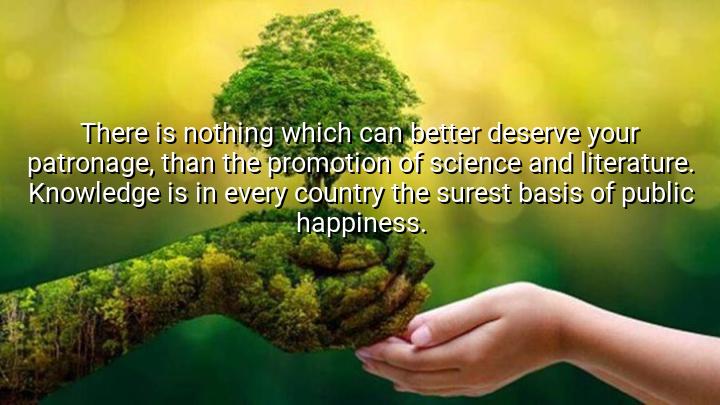




The quote by George Washington, "There is nothing which can better deserve your patronage, than the promotion of science and literature. Knowledge is in every country the surest basis of public happiness," highlights the importance of knowledge, science, and literature in fostering societal well-being. Washington is advocating for the support and advancement of intellectual pursuits, emphasizing that these fields are vital for the progress and stability of any nation. He believes that by promoting education and intellectual growth, a society can build a stronger, more informed citizenry, which is essential for public happiness.
Washington's statement stresses that knowledge—through the means of science and literature—serves as the foundation for long-term societal development. He argues that a nation’s true prosperity and happiness are not solely dependent on material wealth or military strength, but on the strength of its intellectual and cultural institutions. When people are educated and have access to the tools of learning, they can make more informed decisions, contribute to the greater good, and enjoy a higher quality of life.
The reference to patronage implies that those in positions of power and influence have a responsibility to actively support the development of science and literature. Washington is calling on individuals, especially the government, to invest in these areas, recognizing them as integral to building a more just and prosperous society. His emphasis on public happiness suggests that a society's well-being is deeply tied to its intellectual and cultural advancements, which lead to informed, thoughtful citizens.
The origin of this quote comes from George Washington’s broader vision of a thriving, self-sustaining republic. As the first President of the United States, Washington recognized the importance of education and the growth of knowledge for the future of the nation. His belief in the role of science and literature reflects his understanding of the significance of intellectual pursuits in shaping a free, democratic society. This quote captures his vision for a nation grounded in knowledge, where the pursuit of education leads to greater individual and collective happiness.

AAdministratorAdministrator
Welcome, honored guests. Please leave a comment, we will respond soon