

If you make friends with yourself you will never be alone.
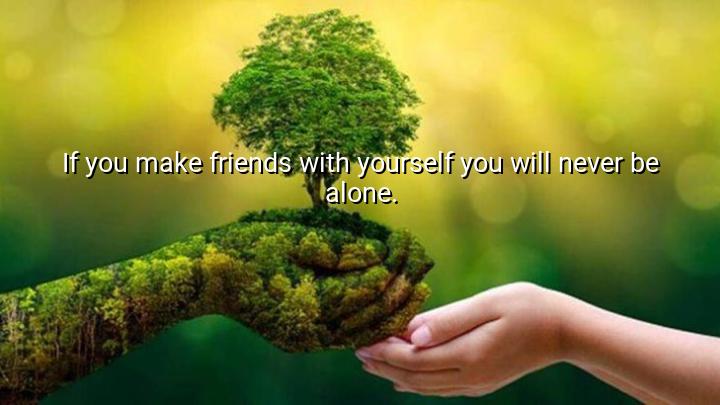




The quote "If you make friends with yourself you will never be alone" by Maxwell Maltz emphasizes the importance of developing a strong and positive relationship with oneself. Maltz suggests that true companionship begins from within—when you accept, understand, and even enjoy who you are, solitude loses its sting. Rather than fearing aloneness, those who are at peace with themselves can find comfort and strength in their own company.
Maxwell Maltz was a 20th-century plastic surgeon and author, best known for his groundbreaking book Psycho-Cybernetics (1960), which explored the connection between self-image and personal success. He found that even after physical changes, many of his patients still struggled with low self-esteem. This insight led him to study psychology, and he came to believe that inner transformation was more powerful than outward change. This quote reflects his core message: self-acceptance is the foundation of a fulfilling life.
The idea of becoming your own friend implies treating yourself with kindness, patience, and respect—the same qualities you would offer to someone you care about. It means being able to sit with your thoughts, feelings, and flaws without judgment. When you have this kind of internal peace, even moments of solitude can feel meaningful, not lonely.
Ultimately, Maltz’s quote reminds us that we are our own most constant companion. If we can learn to like ourselves, we can weather life’s quiet moments and challenges with resilience and grace. It is a call to invest in the one relationship that will always be with us—our relationship with ourselves.

HDLe Thi Hien Diuu
This quote sounds like a goal we should all aim for, but I wonder if it can sometimes be misunderstood. Can focusing too much on being our own friend lead to emotional self-sufficiency that discourages vulnerability with others? I think there's a balance between being whole on your own and still welcoming connection. I'd love to hear how others balance self-love with the desire for community.
AQNguyen Van Anh Quyen
Reading this makes me reflect on the difference between being alone and feeling lonely. It’s true—when I’m kind to myself, solitude feels nourishing. But when I’m stuck in self-doubt or overthinking, even a quiet evening can feel unbearable. Is self-friendship really the antidote to isolation, or is it a skill we have to keep practicing like any other relationship? That nuance feels important to explore.
Nnguyennamphong
There’s a quiet strength in this quote that I admire. It suggests that loneliness can be eased—not by seeking more people, but by cultivating peace with ourselves. But is that realistic for everyone? What about people who grew up with internalized shame or trauma? I wonder if self-friendship is more accessible to those who’ve already done some healing, and less so for those still learning how to love themselves at all.
NNNgoc Nhu
I find this quote inspiring but also challenging. If we’re supposed to be our own best friend, how do we handle the parts of ourselves we don’t like? Can you be friends with someone you often criticize or doubt? I struggle with self-judgment, and this quote makes me realize how much that might affect my ability to enjoy solitude. So how do we begin fostering that inner friendship genuinely?
TPnguyen thao phuong
This quote is so simple, yet it carries a profound message about self-acceptance. But it makes me wonder—what does it really mean to become friends with yourself? Is it about liking your personality, forgiving your flaws, or something deeper like emotional self-trust? I think this kind of inner relationship takes time to develop, and I’m curious if anyone truly feels they’ve reached that level of comfort within themselves consistently.