

I thought about how we need to make children feel that there are times in their lives when they need to be alone and quiet and to be able to accept their aloneness.
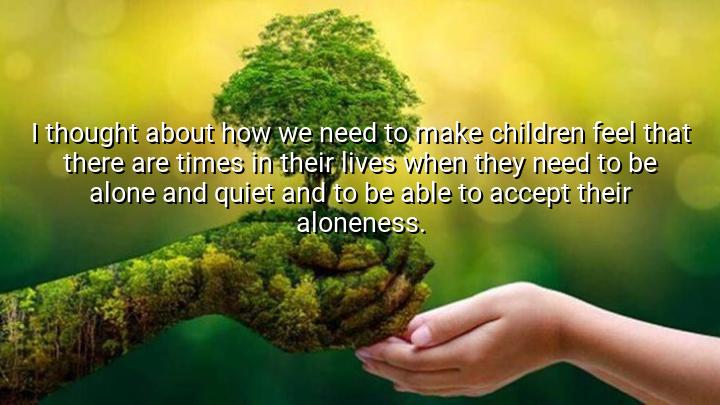




The quote "I thought about how we need to make children feel that there are times in their lives when they need to be alone and quiet and to be able to accept their aloneness." by bell hooks highlights the importance of teaching children the value of solitude and self-reflection. hooks, an influential cultural critic and feminist theorist, suggests that it is essential for children to experience moments of quiet and aloneness, as these experiences help them develop the ability to be comfortable with their own company and to cultivate self-awareness.
hooks argues that in a world that often values constant interaction and stimulation, it is important for children to learn that being alone does not equate to being isolated or unworthy. Instead, solitude can be an opportunity for self-discovery and mental clarity. By teaching children to embrace and accept their aloneness, they can grow up with a deeper sense of emotional independence, free from the pressure to constantly seek external validation or distractions.
The idea of accepting aloneness also speaks to emotional maturity. Children who are encouraged to spend time alone can develop the capacity to be self-sufficient, not relying on others to fill emotional voids. This practice can foster a sense of inner peace and resilience, as they learn to face their own thoughts and emotions without fear or discomfort.
Ultimately, hooks' quote underscores the importance of solitude as an essential part of personal growth. It suggests that helping children understand and embrace moments of quiet and reflection will enable them to lead more balanced, self-reliant lives. The ability to be at peace with one's own company is an important skill that will support emotional well-being throughout life.

QNQuynh nhu
I’m interested in the potential long-term benefits of helping children embrace solitude. Could this acceptance reduce anxiety and dependence on external validation? How might it contribute to their ability to process emotions independently? bell hooks’ insight encourages a mindful approach to childhood development that honors both connection and individuality.
XMTran Thi Xuan Mai
This statement makes me reflect on cultural differences in attitudes toward solitude. Are there societies where being alone is seen as more positive or normal for children? How might these cultural practices influence emotional development? It’s an interesting lens to examine how environment shapes comfort with aloneness and self-reflection.
HCHieu Cao
Could this perspective be a call to value introspection as much as external achievements? Teaching children to accept their aloneness might foster creativity and inner peace. How does society’s attitude toward solitude impact mental health across generations? bell hooks challenges us to consider the quiet moments as essential to growth, not just loneliness.
HHiep
I’m curious about how modern parenting approaches either support or hinder children’s ability to be alone. With so many distractions and pressures to be constantly engaged, do children lose the chance to develop this vital skill? How can educators and caregivers balance social interaction with the need for solitude? This quote invites a reevaluation of how we nurture emotional independence in young people.
THtran thi thu hien
bell hooks’ quote emphasizes the importance of teaching children to embrace solitude. In a world that often prioritizes constant activity and social connection, how can we create spaces that encourage quiet reflection? What role does this acceptance of aloneness play in emotional resilience and self-awareness? It makes me wonder if fostering comfort with solitude early on helps children develop a stronger sense of identity and mental well-being.