

I love to be alone, and I did as a child as well, especially if I was outside.
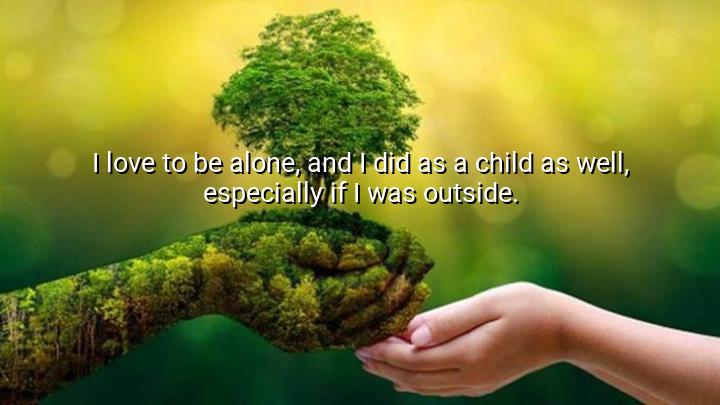




In this quote, Aurora, a Norwegian singer and songwriter, expresses her love for solitude and how it has been a constant in her life. She reveals that as a child, she enjoyed being alone, especially when she was outside in nature. For Aurora, solitude is not a negative or lonely experience but rather a time for reflection, peace, and connection with herself. This love for being alone suggests a deep appreciation for quiet and personal space that allows her to recharge and be in tune with her inner world.
Aurora’s statement also underscores the idea that solitude can be a form of freedom and self-discovery. Unlike many who may feel uncomfortable or isolated when alone, she finds comfort and fulfillment in the quiet moments, particularly when she is surrounded by the outdoors. Her connection to nature reflects the idea that the outside world offers a kind of sanctuary where one can find peace, clarity, and a sense of belonging, even in solitude.
The origin of this quote is likely tied to Aurora's personal experiences growing up in Norway, a country known for its natural beauty and tranquil landscapes. Her love for nature and solitude is often reflected in her music, which often explores themes of self-awareness, emotional connection, and the human experience. Her connection to the outdoors and her introspective nature have been key influences on both her personal life and her artistry.
In essence, Aurora’s quote highlights the value of solitude as a means of personal growth and emotional balance. It shows that being alone does not always equate to loneliness, but can instead be a powerful opportunity for self-reflection and connection with the natural world. Her appreciation for solitude, especially in nature, speaks to the importance of taking time for oneself, away from the distractions of everyday life.

DNDuong Nguyen
This quote makes me reflect on the importance of honoring one’s own rhythms for solitude. How might early positive experiences with being alone outdoors influence mental health and happiness? Can encouraging outdoor solitude be a simple yet powerful way to support emotional well-being in both children and adults?
TDThanhh Datt
Aurora’s words remind me of how personal and varied our needs for solitude can be. Do you think cultural attitudes toward being alone affect how people experience and value it? In a world that often emphasizes constant connection, how can we better appreciate the benefits of solitary time, especially in nature?
TV39 Le Nguyen Tuong Vy
Reading this, I wonder if Aurora’s preference for being alone outdoors reflects a desire for freedom and connection with nature. How does outdoor solitude differ from social isolation? Are there ways to encourage children and adults alike to find joy and restoration in solitary moments spent outside?
NNnyoc nguyen
This quote highlights the comfort found in being alone from an early age. How do you think solitude during childhood impacts creativity and introspection? Could spending time alone outside nurture imagination and self-awareness? It seems like embracing alone time early on might help people develop resilience and emotional balance.
NTNguyen Nguyen Thai
Aurora’s love for solitude, especially outdoors, makes me think about the calming effect nature has on people. Do you think being alone outside offers a unique kind of peace compared to indoor solitude? How might childhood experiences with nature shape one’s relationship with solitude later in life? It’s fascinating how the environment influences our emotional well-being and sense of self.