

I have a deep tribal sense. I grew up in a synagogue that my ancestors built. I sat in the third row. My family was decent. They were good people; they were handshake people. So I never had a sense of rebellion.
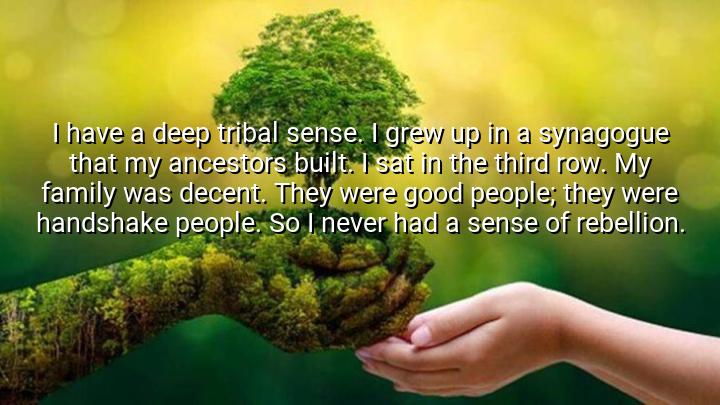




The quote “I have a deep tribal sense. I grew up in a synagogue that my ancestors built. I sat in the third row. My family was decent. They were good people; they were handshake people. So I never had a sense of rebellion” by Leonard Cohen reflects his strong connection to heritage, tradition, and family values. Cohen describes a “deep tribal sense,” meaning a rootedness in cultural and spiritual identity, which in his case is tied to Judaism and the synagogue his ancestors built. The keywords—tribal sense, synagogue, family, and handshake people—highlight a life grounded in respect, decency, and community traditions.
The origin of this quote comes from Leonard Cohen, the Canadian poet, songwriter, and novelist, celebrated for his introspective lyrics and spiritual themes. Cohen was born into a prominent Jewish family in Montreal, and his upbringing in a close-knit, tradition-oriented community strongly influenced his artistic voice and worldview. This reflection comes from his interviews and biographical discussions, where he often described how his childhood environment of decency and faith shaped his calm, reflective nature and lack of youthful rebellion.
The quote also speaks to the power of family and cultural grounding in shaping identity and temperament. Cohen’s description of his family as “handshake people” evokes honor, trustworthiness, and simplicity, suggesting that the values of his upbringing provided a moral compass that made rebellion unnecessary. His sense of belonging within a tribal and spiritual lineage gave him a foundation of security, allowing him to navigate life and art without rejecting his roots.
Ultimately, Leonard Cohen’s statement is a reflection on heritage, gratitude, and the quiet strength of family values. It reveals how tradition and community can foster a deep inner stability, which for Cohen translated into a life of introspection and creativity rather than conflict or defiance. His words remind us that strong family and cultural connections can serve as an anchor, nurturing a sense of identity and peace that lasts a lifetime.

AAdministratorAdministrator
Welcome, honored guests. Please leave a comment, we will respond soon