

To every people the land is given on condition. Perceived or not, there is a Covenant, beyond the constitution, beyond sovereign guarantee, beyond the nation's sweetest dreams of itself.
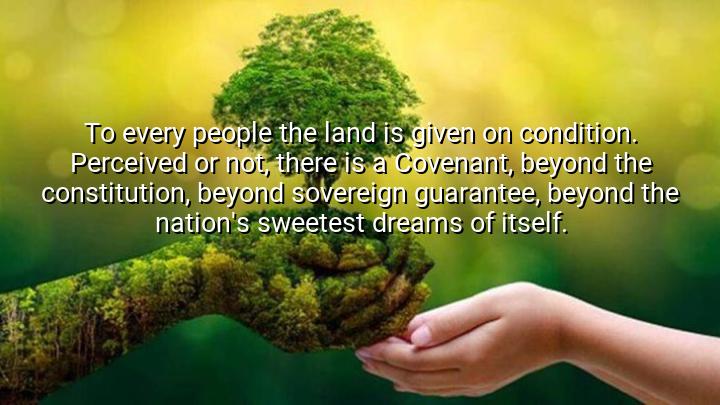




In this quote, Leonard Cohen reflects on the deeper, almost spiritual connection between people and the land they inhabit. He suggests that the land is not simply given by political or legal agreements but is bound by a Covenant—a profound, often unspoken understanding that goes beyond constitutions, sovereign guarantees, or the idealized visions of a nation’s identity. Cohen implies that this covenant is a moral or natural contract, one that holds a deeper, more significant meaning, perhaps rooted in history, culture, and the responsibilities people have to the land and each other.
Cohen’s mention of a Covenant suggests that there is a sense of obligation and accountability tied to the land. This is not simply about ownership or power; it is about stewardship and the ethical relationship between a nation and its people. Regardless of whether it is explicitly recognized, this covenant serves as a guiding principle that transcends written laws and is deeply tied to the nation’s values and legacy. Cohen’s statement encourages reflection on how nations view their land and their role in sustaining it for future generations.
The origin of this quote lies in Cohen's broader artistic and philosophical exploration of human life, culture, and spirituality. Known for his poetic lyrics and thoughtful reflections, Cohen often examined complex themes such as identity, responsibility, and moral integrity. This quote could reflect Cohen’s thoughts on how nations often overlook the deeper, sacred responsibilities they have, both to the land and to the people who live there. It suggests a vision of the relationship between people and land as something transcendent and eternal, not simply a political or economic arrangement.
Ultimately, Cohen’s quote serves as a reminder that the bond between a nation and its people is not just about legal rights or political constructs but about a deeper, more intrinsic relationship. The Covenant he speaks of is a call to recognize the moral obligations that come with inhabiting and caring for the land, one that goes beyond legal structures and touches upon the sacred aspects of human existence and responsibility.

AAdministratorAdministrator
Welcome, honored guests. Please leave a comment, we will respond soon