

I came from a childhood where I spent a lot of time alone and a lot of time just living with my imagination, and a certain amount of the adult world was kind of alienating.
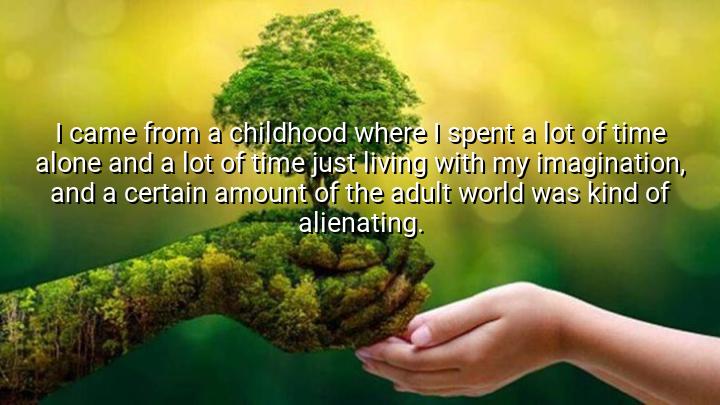




The quote "I came from a childhood where I spent a lot of time alone and a lot of time just living with my imagination, and a certain amount of the adult world was kind of alienating." by Chris Cornell reflects on the formative experiences of his childhood and how they shaped his perspective on solitude, creativity, and the adult world. Cornell shares that he spent significant time alone, relying on his imagination to entertain and engage himself. This experience of being alone fostered a deep sense of individuality and allowed him to cultivate his creativity—something that would later influence his music and artistic expression.
Cornell's statement also touches on how the adult world can feel overwhelming or alienating, especially for someone who grew up with a rich inner life and a strong sense of self through imagination. The challenges of transitioning into the more complex, socially demanding world of adulthood could feel disorienting or disconnected from his earlier, more solitary and imaginative existence. This sentiment is common for many who struggle with the pressures and expectations that come with adulthood, which may seem at odds with a more free-form, creative youth.
The idea of living with imagination and finding solitude as a refuge speaks to the way creativity can act as a shield or a source of strength. For Cornell, the world of music and artistic expression became a means to channel his early experiences of isolation into something powerful and meaningful. His ability to tap into his imagination and channel that into his music made his work resonate deeply with fans who also felt a sense of alienation or disconnection from the conventional adult world.
The origin of this quote comes from Chris Cornell, an American musician and lead vocalist of Soundgarden and Audioslave. Known for his powerful voice and deeply introspective lyrics, Cornell often explored themes of alienation, identity, and personal struggles in his music. His reflection on his childhood and the impact it had on his later life and artistic output offers insight into the personal experiences that shaped his emotional and musical journey.

T124- Le Thanh Tam 12a3
Cornell’s words prompt me to think about the broader implications of childhood isolation. Could early solitude lead to both unique creative talents and challenges in social integration? How can society nurture children’s imaginative worlds while also helping them feel connected and included? Are there ways to turn feelings of alienation into positive growth rather than lifelong barriers?
KDNguyen Khanh Duong
The idea of living with one’s imagination during childhood as a refuge resonates deeply. But does this intense internal world risk making the external world feel foreign? How can someone balance rich inner creativity with engagement in reality? What happens when the adult world doesn’t seem to accept or understand that imaginative perspective?
Dduongtoet
I’m struck by the phrase ‘a certain amount of the adult world was kind of alienating.’ It makes me wonder what aspects felt alien and why. Was it societal expectations, lack of understanding, or something else? How can adults be more empathetic to those who had imaginative, solitary childhoods? Could this alienation influence someone’s approach to life and relationships?
Llong
This quote highlights the complex relationship between solitude and alienation. Do you think children who grow up in solitude necessarily feel disconnected from society, or can that solitude become a source of strength? How might adults better support kids who feel alienated? Could fostering imagination help bridge the gap between childhood isolation and adult integration?
NHNguyen Huynh
Cornell’s reflection on his childhood solitude and imagination feels deeply relatable to anyone who felt out of place growing up. How do you think spending so much time alone shapes one’s creativity and worldview? Can the ‘alienation’ from the adult world fuel artistic expression, or does it create lasting barriers to connection? What role does imagination play in coping with isolation during childhood?