

Every animal leaves traces of what it was; man alone leaves traces of what he created.
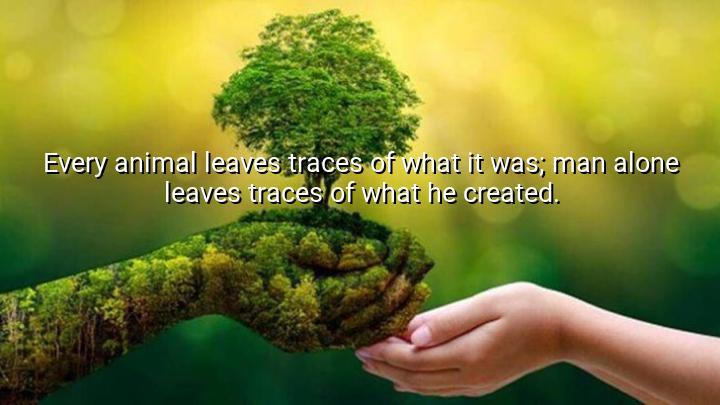




The quote "Every animal leaves traces of what it was; man alone leaves traces of what he created." by Jacob Bronowski highlights the unique capacity of human beings to leave a lasting impact on the world through their creations. Bronowski, a renowned British scientist and philosopher, draws a distinction between humans and animals by focusing on the ability of humans to shape the world through innovation, art, architecture, and technology. While animals leave traces of their existence—such as footprints or nests—humans leave behind marks of their intellectual and creative endeavors, which reflect their culture, knowledge, and vision.
The statement underscores the idea that, unlike other creatures who leave marks primarily related to their biological existence, humans leave physical and cultural legacies. These traces can be anything from the infrastructure of cities to the works of art or the scientific advancements humans have made throughout history. Bronowski is emphasizing that human beings are not only defined by their existence but by their ability to create and transform their environment, leaving a trail of their ideas and innovations that future generations can study and build upon.
Bronowski's quote also speaks to the human spirit of progress and the drive to create something that transcends one's own lifetime. It highlights the uniqueness of humanity’s capacity for imagination and innovation, setting humans apart from the natural world. While animals live in the moment and leave behind only evidence of their survival, humans actively shape their surroundings, contributing to an ever-expanding legacy of human achievement.
Ultimately, this quote reflects on the purpose and impact of human life. By acknowledging the traces humans leave behind, Bronowski invites us to consider our own creations and the lasting effects they may have on future generations. Whether through art, science, or civilization, humans have the power to leave a profound imprint on the world, distinguishing them from all other forms of life.

ANanh nhat
This makes me reflect on the emotional and cultural dimensions of human creativity. Our creations often carry values, stories, and emotions that transcend time. How do these creative traces contribute to collective memory and shared humanity? It’s a powerful reminder that what we build reflects not just our abilities, but our essence.
UGUser Google
I’m curious about how this quote applies in the digital age where human creations—like data and media—leave intangible yet widespread traces. How do these modern creations shape our identity and history? Does the concept of ‘traces’ evolve with technology, and what does that mean for future generations trying to understand us?
DDTu Dao Duc
This quote makes me think about the permanence and impermanence of human creations. While animals’ traces may fade naturally, human creations can endure for centuries. What responsibilities come with this lasting impact? How do we balance creativity with sustainability? It invites deeper thought on the legacy we craft through our actions and inventions.
HNHung ne's
Could this statement be highlighting the power of human agency and imagination? Unlike animals, humans intentionally build and shape their world. How does this ability affect our sense of purpose and meaning? It also brings up the idea of cultural and technological evolution as markers of human progress and identity.
Nnhi
I’m intrigued by the comparison between animals leaving traces of what they were and humans leaving traces of what they created. Does this imply that creativity defines humanity? What about the natural impact humans have on the environment—is that considered a trace of what we were or what we created? This quote encourages reflection on human identity through the lens of innovation and culture.