

By all means use some time to be alone.
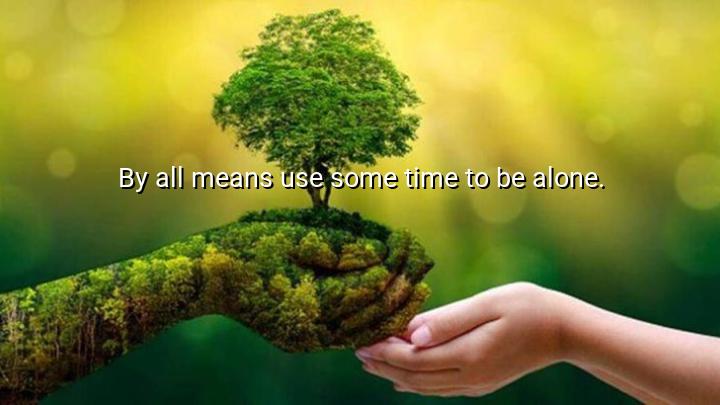




The quote "By all means use some time to be alone" by Edward Young is a gentle yet wise reminder of the importance of solitude in a well-balanced life. Young encourages us to intentionally take time away from the noise and demands of the world in order to reflect, recharge, and reconnect with our inner selves. In solitude, we can think more clearly, explore our own feelings, and gain insights that are often lost in the rush of daily life.
Edward Young was an 18th-century English poet, best known for his work Night Thoughts, a long and reflective poem that contemplates life, death, and human purpose. Much of his writing is meditative and philosophical, urging readers to turn inward and consider the deeper truths of existence. This quote reflects that tone, offering a timeless piece of advice about the value of personal reflection through solitude.
The phrase “use some time” suggests that being alone is not something to fear or avoid, but a productive and even necessary practice. It’s not just about resting or escaping others—it’s about making space for growth, self-awareness, and spiritual clarity. By deliberately choosing to be alone, we gain the opportunity to listen to ourselves and to the quieter truths that are often drowned out in a busy world.
Ultimately, Young’s quote invites us to see solitude not as a retreat from life, but as a vital part of living thoughtfully and authentically. In a world that often values constant activity and connection, his words serve as a powerful reminder that stillness and aloneness are essential for a well-lived and examined life.

BNBao Nghi
What strikes me about this quote is how it treats being alone as a conscious decision, not just a consequence of circumstance. It suggests that solitude has value in and of itself. But I’m curious: what should we actually do during that time? Is it about reflection, rest, creativity—or just breathing? I think people sometimes avoid solitude because they don’t know what to do with it. Maybe we need more guidance on that.
STNguyen Song Toan
There’s something refreshingly old-fashioned and wise about this quote. It doesn’t dramatize solitude—it normalizes it, even encourages it. But I can’t help but ask: have we lost the art of being alone? With constant digital noise, is solitude becoming harder to access or even fearsome for younger generations? Maybe we need to start treating time alone like a skill to cultivate, not just an accidental side effect of modern life.
BNHuu Binh Nguyen
This quote makes me pause. It’s such a gentle nudge toward introspection, yet so few of us actually take that time unless we’re forced to. I wonder—what are we afraid we’ll find when we’re finally alone with ourselves? Maybe that’s why solitude feels both healing and confronting. It’s not always peaceful, but perhaps it’s honest. Can we ever really grow without occasionally stepping away from everything and just listening inward?
TGLe Thi Truc Giang
I really like the simplicity of this quote. It doesn’t preach—it invites. But it also makes me question: what do we gain from time alone that we can't get from being with others? Is it clarity, creativity, emotional regulation? I know I often find my truest thoughts in silence, but it’s hard to be still when the world seems to demand constant connection. Maybe solitude is a forgotten discipline worth relearning.
HHNguyen le Huy Hoang
This quote is such a gentle reminder that solitude isn’t just acceptable—it’s necessary. I find myself wondering, though: in a world that rewards constant engagement and productivity, how do we actually make time to be alone without guilt? Do we need to reclaim solitude as a form of nourishment rather than avoidance? It makes me want to reevaluate how I schedule my days and prioritize quiet, reflective moments.