

All our knowledge merely helps us to die a more painful death than animals that know nothing.
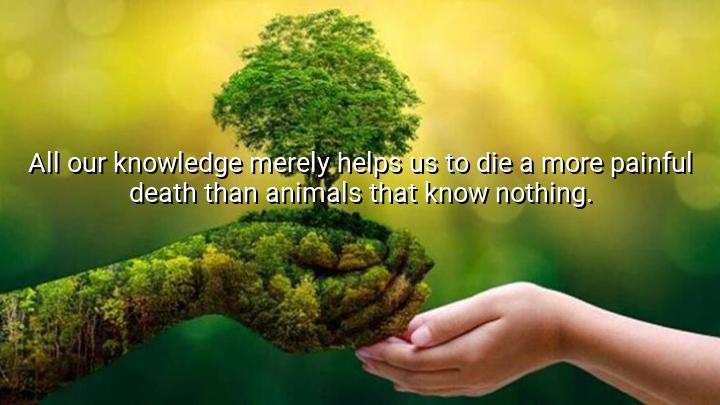




In this quote, Maurice Maeterlinck, a Belgian playwright and poet, reflects on the paradox of human knowledge and its potential to cause suffering. He suggests that the more we know about life, the more we are burdened by our awareness of its inevitable end. While animals live without the burden of understanding death, humans, with their advanced knowledge, often face a more painful reality because they are acutely aware of the impermanence of life and the certainty of death.
Maeterlinck’s words imply that knowledge, rather than offering comfort, can create a heightened sense of existential anxiety. The awareness of our own mortality, and the complexities of life, can make death a more frightening and intolerable experience. This contrasts with animals, who, in their ignorance, live with a kind of natural ease, unaffected by the existential concerns that plague human consciousness.
The quote also suggests that while intellect can offer us solutions to many problems, it does not necessarily protect us from the pain of knowing too much. Instead of providing solace, this knowledge might intensify our fear, regret, and sorrow as we approach our own death, making it seem more overwhelming. This is a reflection on the limits of intellectual knowledge in addressing the emotional and spiritual aspects of human existence.
Ultimately, Maeterlinck’s statement invites reflection on the role of awareness in shaping our experience of life and death. It challenges the notion that knowledge always leads to empowerment or peace, suggesting instead that there are aspects of life that might be simpler and less painful if we lived without the constant consciousness of mortality.

AAdministratorAdministrator
Welcome, honored guests. Please leave a comment, we will respond soon