

Happiness is rarely absent; it is we that know not of its presence.
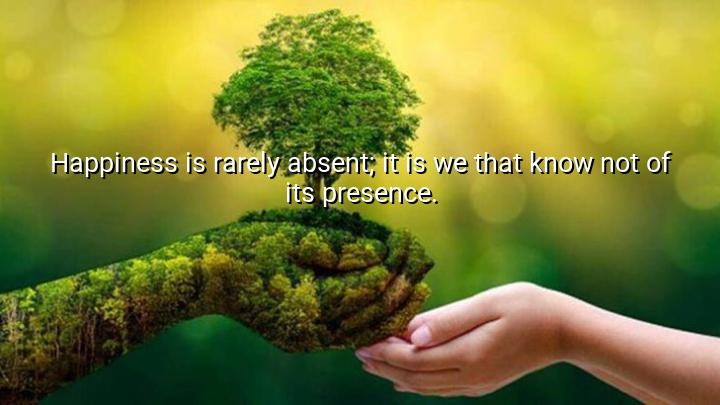




In this quote, Maurice Maeterlinck suggests that happiness is always present in our lives, but often goes unnoticed. He implies that happiness is not something that is rare or fleeting, but rather something that we fail to recognize or appreciate in our everyday experiences. The absence of happiness is not due to its lack, but because we are sometimes blind to the simple moments of joy and contentment that surround us. The quote encourages a deeper awareness of the positive aspects of life, urging us to look more closely at what truly brings us happiness.
Maeterlinck’s words reflect the idea that perception and awareness play a critical role in our experience of happiness. We may overlook the small, fleeting moments of happiness in our daily lives, focusing instead on external goals or desires. Happiness, then, may not be an external force that must be sought after, but an internal state that requires mindfulness to recognize. By shifting our focus, we can learn to appreciate the present and find joy in even the most ordinary moments.
The origin of this quote comes from Maeterlinck’s philosophical and literary reflections on the human condition. Known for his work in symbolist drama and poetry, Maeterlinck often explored themes of spirituality, fate, and the nature of human emotions. His belief that happiness is always present, even if we don’t see it, aligns with his broader views on existence and the deeper meanings of life that can sometimes go unnoticed.
Ultimately, Maeterlinck’s words serve as a reminder that happiness is not a distant or unattainable goal, but something that is already a part of our lives. By being more present and attuned to the small moments of joy, we can uncover the happiness that often goes unnoticed, finding peace and contentment in the simple aspects of life.

AAdministratorAdministrator
Welcome, honored guests. Please leave a comment, we will respond soon