

When we lose one we love, our bitterest tears are called forth by the memory of hours when we loved not enough.
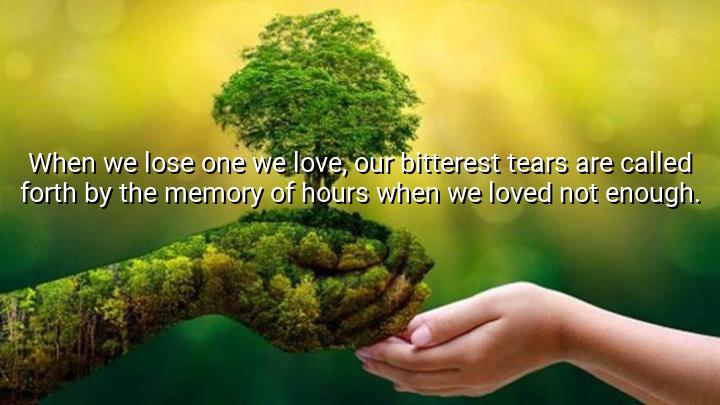




The quote, "When we lose one we love, our bitterest tears are called forth by the memory of hours when we loved not enough," by Maurice Maeterlinck, emphasizes the regret and emotional pain that often accompany the loss of a loved one. Maeterlinck suggests that the deepest sorrow arises not only from their absence but also from missed opportunities to express love fully. This reflection underscores the importance of living with awareness and cherishing our relationships before it is too late.
The origin of this quote comes from Maurice Maeterlinck, a Belgian playwright, poet, and essayist of the late 19th and early 20th centuries, known for his works exploring human emotion, mortality, and the mysteries of life. Maeterlinck frequently examined themes of love, loss, and the human condition, highlighting how regret and introspection shape our understanding of life and relationships. His words capture the universal experience of longing and remorse that comes from not fully expressing affection.
On a deeper level, the quote reflects how love requires conscious effort and presence. The memory of times when we failed to show love can haunt us, emphasizing the fragility and fleeting nature of life. Maeterlinck’s insight reminds us that love is an active practice, and that expressing it generously and consistently can prevent regret and deepen emotional bonds.
Ultimately, "When we lose one we love, our bitterest tears are called forth by the memory of hours when we loved not enough" serves as a timeless reminder that love should be expressed fully and intentionally. Maurice Maeterlinck’s words encourage embracing every opportunity to show affection, gratitude, and care, demonstrating that love’s absence is felt most profoundly when it was underexpressed in life.
I can also create a short, poignant version suitable for a social media post or quote card if you want.

AAdministratorAdministrator
Welcome, honored guests. Please leave a comment, we will respond soon