

We possess only the happiness we are able to understand.
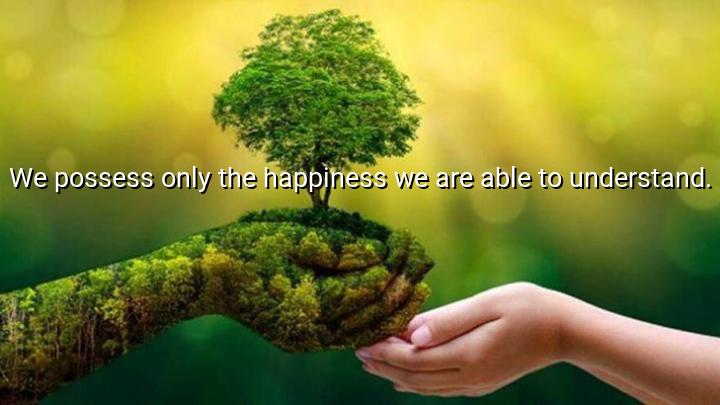




In this quote, Maurice Maeterlinck suggests that our capacity for happiness is limited by our ability to understand it. He implies that happiness is not merely a matter of experiencing joy, but of being able to fully comprehend and appreciate it. Understanding happiness requires emotional maturity and awareness; if we cannot grasp its deeper meaning or recognize it for what it truly is, we may miss out on its richness. This perspective invites reflection on how our perception of happiness shapes our ability to experience it.
Maeterlinck’s statement also emphasizes the idea that happiness is subjective and tied to consciousness. What brings happiness to one person may not be perceived as such by another, depending on their level of understanding or awareness. To truly possess happiness, one must be open to recognizing its presence and value, rather than merely seeking external circumstances that seem to promise joy. Happiness, therefore, becomes something that is not just given but also realized through reflection and insight.
The origin of this quote lies in Maeterlinck’s broader philosophy and literary works, which often explored themes of spirituality, meaning, and the nature of human existence. As a Belgian playwright and poet, Maeterlinck was deeply concerned with the inner workings of the human soul and the pursuit of fulfillment. His work, including plays like The Blue Bird, often examined the contrast between external circumstances and internal states of mind, especially regarding the pursuit of happiness and contentment.
Ultimately, Maeterlinck’s quote teaches that true happiness is more than just a feeling; it is a state that requires understanding and awareness. We can only experience and possess happiness to the extent that we are able to recognize and appreciate it in our lives. This understanding shifts the focus of happiness from something external to something we cultivate within, making it a product of our own consciousness and insight.

AAdministratorAdministrator
Welcome, honored guests. Please leave a comment, we will respond soon