

An act of goodness is of itself an act of happiness. No reward coming after the event can compare with the sweet reward that went with it.
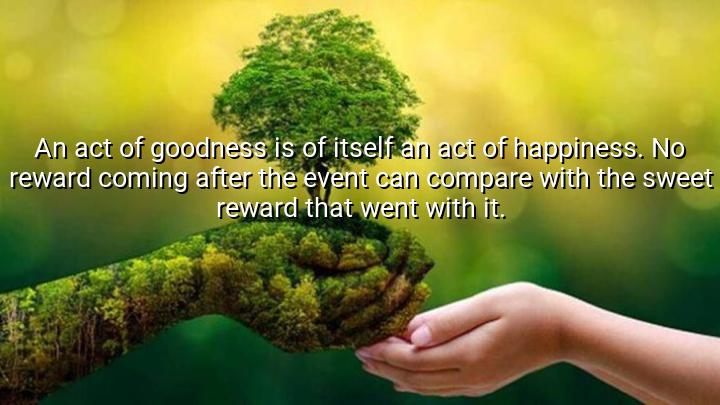




In this quote, Maurice Maeterlinck explores the relationship between goodness and happiness, suggesting that the act of being good or performing an act of kindness is, in itself, a form of happiness. He emphasizes that no external reward, whether it be recognition, praise, or material gain, can compare to the satisfaction and joy that come from doing something good. The inherent reward of kindness or goodness is felt in the moment of the act, making it a fulfilling experience that stands apart from anything that may come afterward.
Maeterlinck’s statement reflects the idea that true contentment doesn’t come from seeking external validation but from the internal satisfaction derived from doing something selflessly. The sweet reward mentioned in the quote refers to the emotional and psychological benefits of kindness, which often surpass the tangible rewards we might receive later. The joy of helping others or acting with goodness is deeply personal and immediate, creating a sense of inner fulfillment that cannot be replicated by future outcomes.
The origin of this quote comes from Maeterlinck’s philosophical and literary works, where he often explored themes of human nature, morality, and the search for meaning. Known for his insights into the deeper emotional and spiritual aspects of life, Maeterlinck believed that acts of goodness were not only beneficial to others but also essential to one’s own well-being. His writing reflects a belief in the intrinsic value of virtuous behavior and the personal rewards it brings.
Ultimately, Maeterlinck’s quote underscores the importance of finding joy in the act of giving or being good, rather than focusing on external recognition. It reminds us that the satisfaction from doing good is immediate and deeply rewarding, making it far more meaningful than any rewards that might follow.

AAdministratorAdministrator
Welcome, honored guests. Please leave a comment, we will respond soon