

Young people, when they're left alone, always want to have compassion, and they always want to give. They always want to help people who are less fortunate.
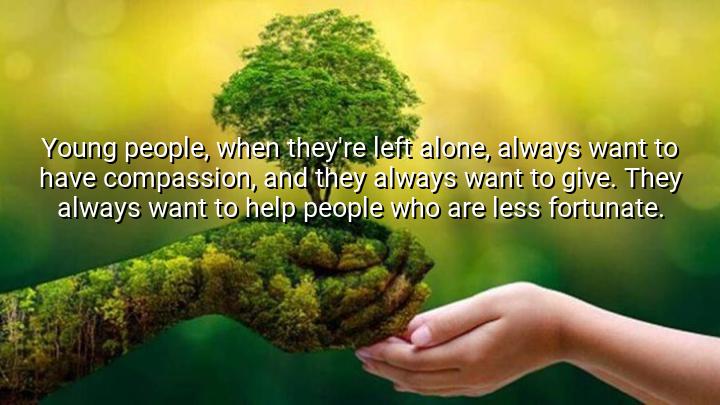




The quote "Young people, when they're left alone, always want to have compassion, and they always want to give. They always want to help people who are less fortunate." by Russell Simmons highlights the inherent generosity and empathy that many young people demonstrate when they are given the space to think independently. Simmons suggests that, without external pressures or distractions, young individuals naturally lean towards acts of kindness, desiring to make a positive impact on the lives of those who are less fortunate. This emphasizes the innate compassion that is often seen in youth.
Simmons' words reflect a belief in the idealism and altruism of younger generations. When young people are not preoccupied by societal expectations or the complexities of adult life, they are more likely to act out of a genuine desire to help others. The desire to assist the less fortunate stems from an intrinsic understanding of justice and fairness, values that are often more pronounced in youth, who may be less jaded by the world’s inequalities.
The quote also speaks to the idealistic nature of youth and how it can drive them to seek out ways to improve the world around them. Simmons believes that when young people are given the freedom to express themselves and make choices, they will naturally channel their energies toward compassionate actions, showing that empathy is a deeply rooted part of the human experience.
The origin of this quote comes from Russell Simmons, an American entrepreneur, philanthropist, and music producer, best known for co-founding the influential Def Jam Recordings. In addition to his successful career in the music industry, Simmons is also known for his advocacy in social and humanitarian causes. His statement about young people reflects his belief in the potential of youth to drive positive change in the world, especially when they are encouraged to follow their natural instincts for compassion and giving.

TVdao tran van
Russell Simmons’ statement raises an important question about the role of freedom in developing empathy. Could structured programs or mentorship limit or enhance young people’s compassion? How do peer influence and social media shape their views on helping others? I’m interested in hearing perspectives on cultivating authentic generosity in today’s youth culture.
LNLan Nong
The quote suggests an optimistic view of youth nature, but I question whether this compassion translates into sustained action. What challenges do young people face in maintaining their desire to help over time? How can communities and institutions encourage consistent involvement rather than temporary gestures? I’d like to explore ways to channel youthful energy into long-term social good.
Bbaochau
Reading this, I’m curious about how the idea of ‘being left alone’ influences young people’s motivations. Does autonomy enhance their empathy, or is guidance still necessary? Could too much isolation lead to disengagement instead of compassion? I wonder how balance between independence and support can help foster genuine altruism among youth.
CBLe Anh Chi Bao
This quote makes me think about the potential of young people to drive social change when given freedom. But are there cases where youth might not express compassion if left to their own devices? How do factors like environment, culture, or access to resources affect their willingness and ability to give? It would be interesting to discuss examples where youth-led initiatives have made a real impact.
TLThao Le
Russell Simmons’ view on young people’s innate compassion is inspiring, but I wonder how much external influences shape or suppress that natural desire to help others. Does society sometimes pressure youth into conformity that dulls their generosity? What role do education and community play in nurturing or hindering this compassion? I’d love to hear thoughts on how to best support young people in acting on their empathy.