

While the resurrection promises us a new and perfect life in the future, God loves us too much to leave us alone to contend with the pain, guilt and loneliness of our present life.
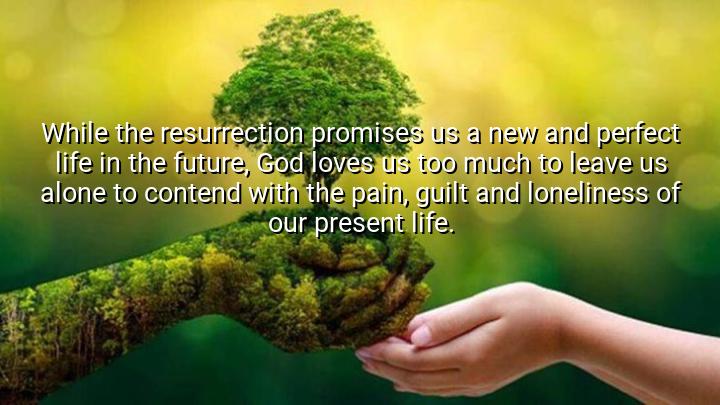




The quote "While the resurrection promises us a new and perfect life in the future, God loves us too much to leave us alone to contend with the pain, guilt and loneliness of our present life" is from Josh McDowell, a Christian apologist, evangelist, and author known for his work on defending the Christian faith. In this statement, McDowell reflects on the concept of resurrection and the idea of divine love. He acknowledges the promise of eternal life and salvation that the resurrection represents, but emphasizes that God’s love does not leave individuals to face the suffering and emotional burdens of life alone.
McDowell’s words highlight the Christian belief that while eternal life in a perfect state is a future promise, God’s love and support are present in the here and now. The resurrection is seen as not just a future hope but a symbol of God's active involvement in helping believers navigate their current struggles, such as pain, guilt, and loneliness. God’s love, according to McDowell, is not distant or passive but is a constant source of comfort and strength in everyday life.
The phrase "God loves us too much to leave us alone" conveys a sense of divine compassion. McDowell implies that God is always present, offering solace and guidance during times of hardship. It suggests that the challenges of life are not meant to be faced in isolation, and that God provides not only the promise of a better future but also the support needed to endure the difficulties of the present.
In essence, McDowell’s quote combines hope in the future resurrection with a present-day comfort rooted in God’s love. It reinforces the idea that spiritual support is not limited to the promise of life after death but is also a source of healing and strength during one’s earthly journey. This message encourages believers to lean on God’s love as they face life's inevitable challenges, knowing that they are never alone in their struggles.

XKLe Nguyen xuan khanh
There’s a real tenderness in this message. It makes me think of how faith can be both a promise and a companion. But how do people who feel distant from God reconcile with this idea? If someone feels abandoned in the present, it might be hard to believe that they’re being loved through their pain. How can we help others trust in unseen comfort when their reality feels so isolating?
L6CHUNG THANH PHUC LOP 6B
What resonates with me is the idea that faith isn’t just about the end goal but the journey. McDowell suggests that God walks with us through guilt and sorrow—not just promises us a way out. But do we acknowledge that enough in our spiritual lives, or are we too focused on reward over relationship? This quote challenges me to seek a more present, everyday faith.
LPThao Le Phuong
This line makes me reflect on the nature of divine love—not as distant or delayed, but intimate and immediate. Still, I struggle with this sometimes. If God loves us too much to leave us alone, why does He feel so absent in our darkest moments? Is it possible that our perception of loneliness is different from spiritual reality? Or are we just not trained to recognize God's presence in our pain?
MLM LALISA
I appreciate the balance here between hope for the future and attention to present pain. It makes me think: do some people focus too much on the afterlife as a way to escape dealing with the pain they feel now? McDowell seems to be saying that divine love is active and present. How can churches or communities better help people realize they’re not alone in their current hardships?
KVKhanh Van
This quote is really comforting, especially for anyone going through a hard time. It reassures us that faith isn’t just about future salvation, but also about God’s presence in our daily struggles. But I wonder—how do we recognize that presence in moments of silence or suffering? Are there practical ways people experience this support, or is it something we only fully understand in hindsight?