

Whether in chains or in laurels, liberty knows nothing but victories.
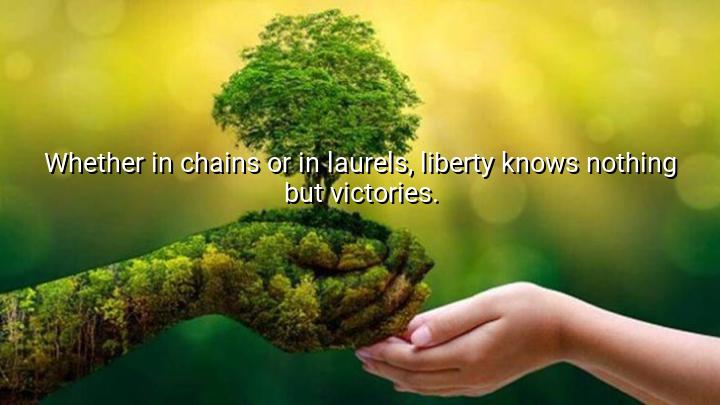




The quote "Whether in chains or in laurels, liberty knows nothing but victories" by Wendell Phillips expresses a profound understanding of the nature of freedom. Phillips suggests that no matter the circumstances—whether oppressed (in chains) or celebrated (in laurels)—true liberty always leads to a form of victory. The idea is that liberty, in its essence, cannot be defeated. It may be suppressed temporarily or celebrated at other times, but it will always find a way to emerge as a form of triumph.
The mention of chains symbolizes oppression and the struggle for freedom, which has historically been a reality for many people, particularly those enslaved or under tyrannical regimes. On the other hand, laurels represent victory and honor, typically awarded to those who have achieved success. By juxtaposing these two symbols, Phillips underscores that the very spirit of liberty cannot be vanquished—it persists, whether in times of hardship or in times of recognition and celebration.
Phillips, a prominent abolitionist and social reformer, was an outspoken advocate for human rights and equality. This quote reflects his deep belief in the resilience of freedom and its eventual triumph over tyranny. It suggests that, regardless of the external circumstances, the internal power of liberty will ultimately lead to victory because it is aligned with the principles of justice and human dignity.
Wendell Phillips' activism during the 19th century, especially in relation to the abolitionist movement, gives context to this quote. As someone who fought for the freedom of enslaved people and the rights of marginalized groups, Phillips viewed liberty as a force that could not be permanently stifled. His words continue to resonate in conversations about the ongoing struggles for freedom and equality around the world.

AAdministratorAdministrator
Welcome, honored guests. Please leave a comment, we will respond soon