

Freedom consists not in doing what we like, but in having the right to do what we ought.
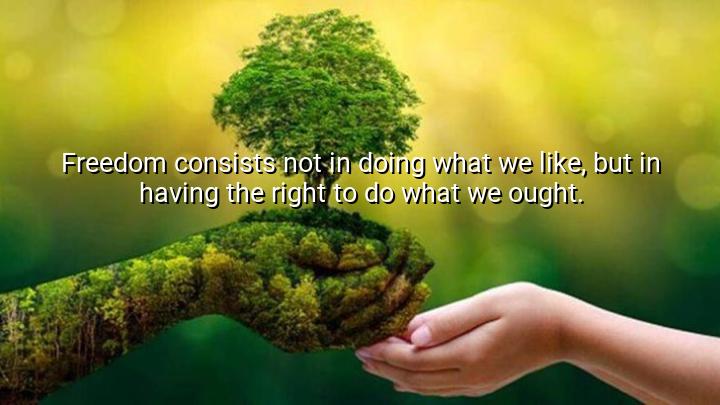




In this quote, Pope John Paul II highlights the distinction between freedom as mere license to do whatever we want, and true freedom that is guided by moral responsibility. He argues that freedom is not simply the ability to act on desires or whims, but the right to do what is right—what we ought to do according to ethical principles and societal good. This view aligns with a more moral understanding of freedom, where it is intertwined with the duty to make choices that are aligned with justice, truth, and the common good.
The quote suggests that freedom should not be confused with the freedom to indulge every personal desire or selfish impulse. Instead, true freedom is the ability to choose actions that are aligned with moral obligations and responsibility. It is about exercising self-control and making decisions that contribute positively to both individual lives and society. Pope John Paul II implies that this kind of freedom requires wisdom and a commitment to ethical behavior rather than self-centered actions.
Additionally, the quote emphasizes the importance of individual responsibility within a society. While people are free to choose their actions, they must also understand that freedom comes with accountability for those choices. In this way, the quote aligns with the Catholic perspective that freedom is not a lawless, unrestrained pursuit, but a purposeful and thoughtful engagement with the world, grounded in moral truth.
Ultimately, Pope John Paul II's statement calls for a deeper, more disciplined view of freedom—one that acknowledges the importance of moral choices. It suggests that true freedom is found in the ability to do what is right, guided by ethical principles, rather than doing whatever we feel like at the moment. Freedom is a privilege, but it is also a responsibility that requires individuals to live with purpose and integrity.

AAdministratorAdministrator
Welcome, honored guests. Please leave a comment, we will respond soon