

When you have adversity and you have pain, you never feel more alone than you do at that moment. And you can be surrounded by hundreds of thousands of people.
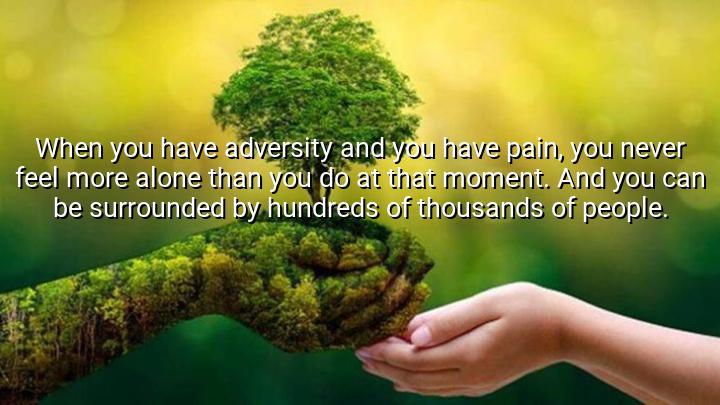




The quote "When you have adversity and you have pain, you never feel more alone than you do at that moment. And you can be surrounded by hundreds of thousands of people." by Sandra Bullock speaks to the deep sense of isolation that people often feel during times of adversity and pain, regardless of their physical surroundings. Bullock suggests that emotional suffering can make an individual feel profoundly alone, even in a crowd. Despite being surrounded by others, the internal experience of grief or hardship can create a barrier, making it hard to feel connected or understood.
This statement highlights the contrast between external presence and internal isolation. Even when surrounded by people, one can still experience feelings of loneliness if they are struggling with personal difficulties. Bullock’s words reflect the idea that true emotional connection is needed to overcome feelings of loneliness, and that simply being in the presence of others doesn't necessarily alleviate emotional pain.
The quote also emphasizes the universality of emotional experiences. Regardless of one's circumstances—whether they are famous or surrounded by friends and family—adversity can lead to moments of feeling alone, as it is often a deeply personal and internal experience. The pain of hardship can create a sense of detachment, where the individual feels cut off from others, despite the physical proximity of people around them.
The origin of this quote lies in Sandra Bullock, an acclaimed actress known for her roles in films like The Blind Side and Gravity. Bullock has spoken openly about the emotional challenges she has faced in her personal life, and this quote reflects her understanding of the human condition. It underscores her belief in the emotional weight of personal struggles and the often overlooked loneliness that accompanies difficult moments.

GDGold D.dragon
This statement reminds me how loneliness is not just about physical solitude but emotional distance. How can friends and family be more attuned to the hidden struggles of loved ones? Could better communication or vulnerability reduce that profound sense of aloneness? It challenges us to rethink how we support each other during hardship.
TAtram anh
The quote highlights how personal adversity can create emotional barriers that others can’t easily cross. How do individuals learn to reach out or accept help when they feel this way? Are there cultural or personality differences in how people cope with such isolation? This could open up important discussions about mental health and support systems.
HVHoang Vu
I’m struck by the idea that you can feel utterly alone even in a sea of people. How might technology and social media influence this experience today—do they help or hinder feelings of connection during tough times? It would be interesting to explore ways to foster genuine human connection in a hyper-connected world.
Vvrgvfdh
This quote feels deeply relatable and sad. How can we better recognize when someone is struggling internally despite external appearances? Does society do enough to address invisible pain and loneliness? It raises questions about empathy and the importance of meaningful connection beyond just physical presence.
NHNga Ho
Sandra Bullock’s quote poignantly captures the paradox of loneliness amid a crowd. It makes me wonder, why does pain isolate us even when we’re surrounded by others? How do people navigate these moments of emotional isolation? I’m curious about what kinds of support—emotional or social—actually help reduce that sense of being alone during adversity.