

When one by one our ties are torn, and friend from friend is snatched forlorn; when man is left alone to mourn, oh! then how sweet it is to die!
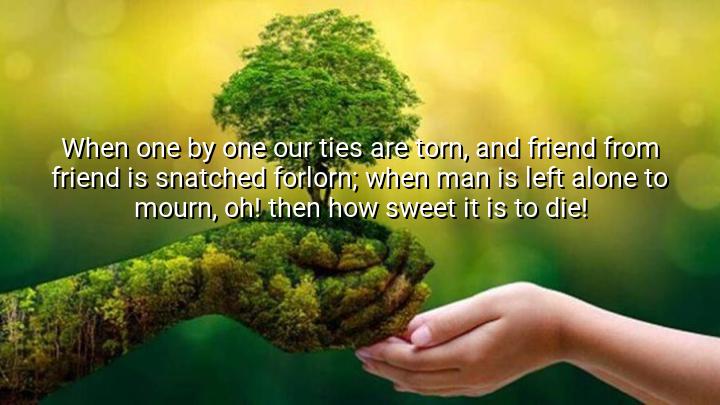




The quote "When one by one our ties are torn, and friend from friend is snatched forlorn; when man is left alone to mourn, oh! then how sweet it is to die!" by Anna Letitia Barbauld expresses the profound grief and isolation that can accompany the loss of human connections. Barbauld, an English poet and essayist, explores the idea that when the bonds that tie us to others—be they friendship, family, or community—are severed, life becomes overwhelmingly difficult, leaving the individual to face the harsh reality of solitude. In this sense, death might be seen as a welcome release from the emotional pain of loss.
Barbauld's words reflect the human tendency to find comfort in the presence of others. When connections are broken, the resulting loneliness can feel unbearable. The phrase "oh! then how sweet it is to die!" suggests that, in the face of intense emotional suffering, death might seem like a peaceful escape from the relentless pain of loss. The sweetness described here is not literal but symbolic, highlighting how overwhelming grief can sometimes make death appear as a release from sorrow.
This sentiment also taps into themes of existential struggle. The idea of death as an escape reflects the despair that arises when one feels disconnected from the world and others. Barbauld is exploring the depths of human vulnerability, where the loss of relationships can strip away meaning and purpose, leaving only the aching void of loneliness. In such moments, death, while not desirable, may seem like the only solution to end the pain.
Ultimately, Barbauld's quote underscores the fragility of human life and the importance of human connection. The idea that death can be sweet in the face of isolation serves as a reminder of how much we rely on relationships for emotional survival. Her words invite reflection on the ways in which loss and isolation can challenge one's will to live, offering a stark view of the emotional weight of being left alone to mourn.

NHPhan Nhat Ha
This quote captures the depth of loneliness in such vivid, poetic terms. But I’m left wondering—was this intended as a personal catharsis or as a universal lament? It also raises the question: do we value life mainly through the lens of relationships? If so, what does that mean for people who live alone, by choice or circumstance? Can a life without strong ties still feel meaningful?
DLDinh Dung Le
There’s something almost terrifying in the truth of this quote. When your emotional bonds are severed one by one, what’s left to live for? Yet I question—does this diminish the possibility of healing, or of forming new connections even late in life? It’s powerful, yes, but is it fatalistic? I wonder how this message would resonate in different cultures, especially those with strong traditions of communal aging.
TTThao Nguyen Thi Thanh
This makes me think about the fine line between poetic expression and existential crisis. Is Barbauld romanticizing death, or simply acknowledging the pain of outliving everyone you love? It’s striking how she ties emotional erosion to a longing for release. I’m curious—do readers find this empowering in its honesty or dangerously melancholic? Could this be read differently by someone dealing with grief versus someone in depression?
NTNgoc Tam
Reading this, I can’t help but feel a sense of deep sorrow. But I also wonder—could this be a commentary on the natural progression of aging, where isolation becomes more pronounced as loved ones pass on? Is the sweetness in death here meant as peace or escape? And how do we reconcile such a sentiment with modern efforts to find meaning and joy even in solitude?
NHPhan Nhat Ha
This quote feels hauntingly beautiful but also incredibly heavy. Is Barbauld expressing despair, or is she offering a poetic reflection on the relief death brings after profound emotional loss? It makes me wonder—does this perspective come from personal grief, or was it more of a philosophical statement on human vulnerability and connection? I’d love to explore whether this line was controversial in her time or embraced for its honesty.