

When I think about my teenage years, when my parents broke up, and feeling alone and being out of control and having to survive... And then other times when you've had to find your own way... that's always been a dominant theme in what I've done.
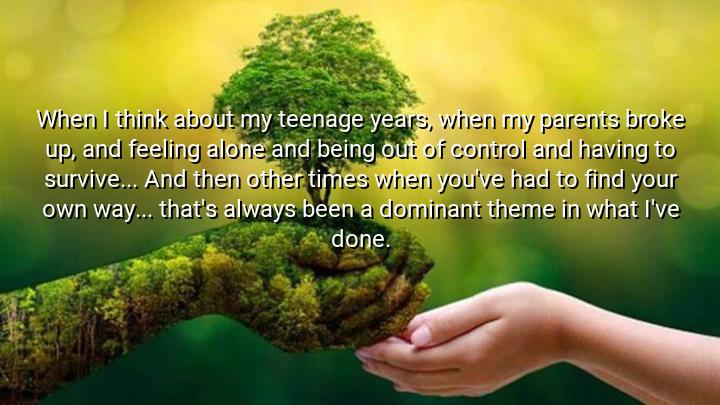




In this quote, Matt Bellamy, the lead vocalist and guitarist of the band Muse, reflects on his teenage years and the personal struggles he faced during that time. He recalls the emotional turmoil of his parents' breakup, feeling alone, and being out of control while trying to survive these difficult circumstances. Bellamy acknowledges that these formative experiences of struggle and self-reliance have been a recurring theme throughout his life and in his creative work.
Bellamy's statement highlights the theme of resilience and self-discovery. As he navigated challenging personal moments, such as his parents' separation and the feeling of being lost, he learned to find his own way and develop a sense of independence. These experiences shaped his identity and influenced his approach to both life and music. The feeling of being "out of control" is something many people can relate to, especially during adolescence, and Bellamy’s acknowledgment of this struggle shows how it became a defining aspect of his journey.
The origin of this quote lies in Bellamy’s personal experiences and how they have influenced his music and lyrics. Known for his emotionally charged songs and often intense themes, Bellamy has used his struggles as inspiration for many of Muse’s tracks. His reflections on these challenging moments help to explain the darker, more introspective tones in much of his work, where themes of alienation, existentialism, and personal empowerment frequently emerge.
In essence, Bellamy’s quote underscores how adversity and the need to overcome difficult situations have played a central role in his life and creative expression. It suggests that his ability to face struggles and find his way through them has not only shaped who he is as a person but has also been a driving force in his music. His journey of survival and self-discovery continues to resonate in his work, offering a message of strength and personal growth.

THDao Thuy Hang
Matt Bellamy’s candidness about his past invites reflection on how overcoming hardship can define creative identity. Does embracing vulnerability in art foster deeper connections with audiences? How do you think such honesty influences the reception of an artist’s work? It’s inspiring to see resilience expressed through music.
HYTa Hai Yen
This quote makes me think about the role of family dynamics in shaping one’s path. How do parental separation and feelings of isolation affect young people differently? Are there ways to support teens in finding stability and confidence despite such challenges? It’s a reminder of the importance of empathy and guidance.
T8Nguyen Quang Trong 8a12
Bellamy’s words emphasize the theme of survival and self-discovery. How might these experiences influence the messages conveyed in his music? Can listeners find solace or empowerment through relating to such themes? It’s powerful when artists translate personal pain into shared understanding.
BBBaoo Beoo
Reading this, I wonder how much artists like Bellamy consciously channel their past experiences into their work. Does revisiting painful memories through creativity offer healing or risk reopening wounds? It’s a delicate balance between authenticity and self-preservation that many creatives navigate.
LBLuong Bong
This quote highlights the impact of feeling out of control during formative years. How do people find resilience in such situations? Is the journey of ‘finding your own way’ essential for personal growth, or can it sometimes lead to lasting challenges? It raises questions about support systems and coping mechanisms during tough times.