

When everything is lonely I can be my best friend.
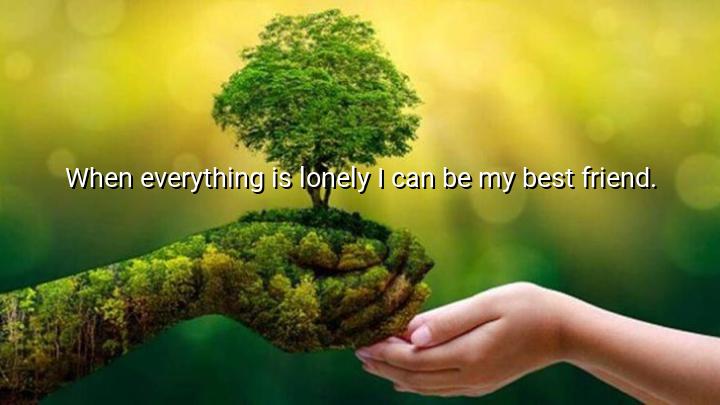




The quote "When everything is lonely I can be my best friend" by Conor Oberst expresses the idea of finding comfort and strength within oneself during times of loneliness. Rather than succumbing to the pain of feeling isolated, Oberst suggests that one can turn inward and become their own source of support, understanding, and companionship. It’s a gentle affirmation that even when the world feels empty, we still have the capacity to be kind to ourselves.
Conor Oberst, a singer-songwriter known for his work with the band Bright Eyes, often writes lyrics that explore themes of emotional vulnerability, existential reflection, and personal resilience. This quote comes from the song “First Day of My Life,” where Oberst captures moments of quiet introspection and self-realization. His words resonate with listeners who have experienced emotional solitude and sought inner peace in the absence of external comfort.
The phrase “be my best friend” highlights the importance of self-compassion. In times of loneliness, we often crave connection, but Oberst reminds us that we are always capable of offering that care and acceptance to ourselves. Learning to enjoy one's own company and to be emotionally self-sufficient can transform solitude from something painful into something healing and empowering.
Ultimately, Oberst’s quote is a celebration of emotional resilience. It encourages us to embrace the stillness of loneliness as an opportunity to strengthen our inner relationship—to become not only our own comfort, but also our own companion. In doing so, we find that even in moments of emptiness, we are never truly alone.

QCNguyen Quynh Chi
This quote hits in a very intimate way. It seems to say that when no one else is there, you're forced to confront and eventually comfort yourself. But I wonder, does it take loneliness to discover self-love, or can we learn it before reaching that place? I’d love to believe that we can nurture that friendship with ourselves even in times of joy, not just as a response to emptiness.
TNTieu Pham Thao Nhi
Reading this quote makes me reflect on how important it is to develop inner dialogue. Being your own best friend means showing up for yourself with kindness, patience, and honesty—especially when no one else is around. But how often do we do that, really? So much of our time is spent looking outward for affirmation. Can we shift that focus inward without feeling like we’re giving up on human connection?
HHieu
This quote makes me think about the difference between solitude and self-connection. There are times when being alone feels painful, but then there are moments when it actually feels empowering—like rediscovering parts of yourself. I wonder, is it possible that loneliness sharpens our ability to self-reflect and nurture a deeper internal relationship? Maybe it's in our quietest moments that we meet the most honest version of ourselves.
NMSang Nguyen Minh
I love the quiet strength in this line. It reminds me that loneliness doesn’t have to mean despair—it can be an opportunity to turn inward and find peace in your own presence. Still, I have to ask: is that always a good thing? Can becoming your own best friend also make it harder to let people in later? I think there's a fine line between emotional independence and guardedness.
PANguyen Thi Phuong Anh
There’s something really bittersweet about this quote. It suggests that loneliness isn’t just absence—it can be a space for self-compassion. But I’m curious, does this inner friendship come naturally, or is it something you have to learn? For people who struggle with self-worth, being their own best friend might feel impossible. How do we build that kind of relationship with ourselves when we’ve spent years being self-critical?