

What we have done for ourselves alone dies with us; what we have done for others and the world remains and is immortal.
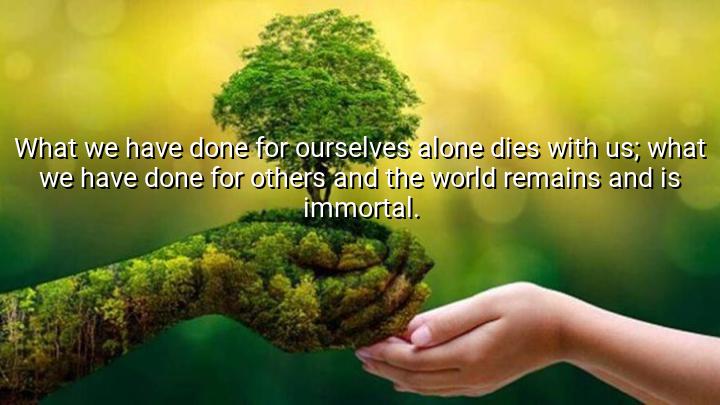




In this quote, Roosevelt Skerrit reflects on the difference between self-serving actions and actions that benefit others or the world. He suggests that the things we do solely for our own gain or satisfaction are temporary and cease to have any lasting impact after we pass away. In contrast, the positive contributions we make for others—whether through acts of kindness, charity, or improving society—have a much greater and enduring value. These actions create a legacy that outlives us and can continue to influence the world long after our time.
Skerrit’s statement speaks to the concept of immortality through service and selflessness. When we work for the betterment of others, we contribute to something larger than ourselves. These actions ripple through time, leaving a lasting impression on those who benefit from them. In this sense, our influence can transcend our lifetime, becoming part of a greater movement of goodwill that endures for generations.
The quote also draws attention to the importance of legacy and the values we choose to prioritize in our lives. It serves as a reminder that focusing on the well-being of others and contributing to the common good can lead to a far more meaningful and impactful life. Skerrit’s view encourages individuals to shift their focus from short-term, personal achievements to more significant, long-lasting contributions that benefit society as a whole.
Ultimately, Skerrit’s words inspire reflection on how we use our time and resources. By dedicating ourselves to actions that improve the lives of others and the world at large, we create a legacy that is immortal, far outlasting our physical existence. This quote encourages us to look beyond personal gain and work toward something that leaves a lasting positive impact on future generations.

TMDuyen Vo Thi My
This quote makes me reflect on how fleeting material success can be. It raises a concern for me: in our productivity-driven culture, are we steering people toward self-centered pursuits that die with them? Maybe we should rethink how we define success and start emphasizing community, service, and compassion more. What would society look like if we all prioritized legacy through service instead of legacy through status?
TPThu Phuong
Does this idea imply that our legacy is only built through altruism? I’m conflicted because some personal achievements, like art or innovation, also endure—even if they started from a self-driven place. Can something born of personal ambition still serve the world and be immortal? This quote raises a complex question about intention versus impact that I’d love to hear more perspectives on.
ATNguyen Thi Anh Thu
This made me think of the ripple effect—how even small acts of service or kindness can outlive us in ways we’ll never fully see. But then I wonder: how do we measure what’s truly lasting? Is it about how many people we reach, or how deeply we affect even one life? I’m curious how others measure the immortality of their efforts or if they even try to.
PANguyen Doan Phuong An
I find this quote beautiful but also kind of intimidating. It makes me feel like anything I do for myself alone is somehow less worthy. Is that fair, though? Don’t we need a balance between personal growth and helping others? I’m trying to reconcile how self-care and ambition fit into this worldview. Can personal fulfillment still be meaningful if it doesn’t directly serve the greater good?
HPNinh Hong Phuc
This reminds me of the idea of legacy, but I wonder—does everyone have to strive for some grand, world-changing impact for their life to matter? What if the 'immortal' things we do are small but deeply meaningful, like kindness or mentorship? I’d like to explore how we define lasting value in an age where fame and visibility are often mistaken for true contribution.