

What we have done for ourselves alone dies with us; what we have done for others and the world remains and is immortal.
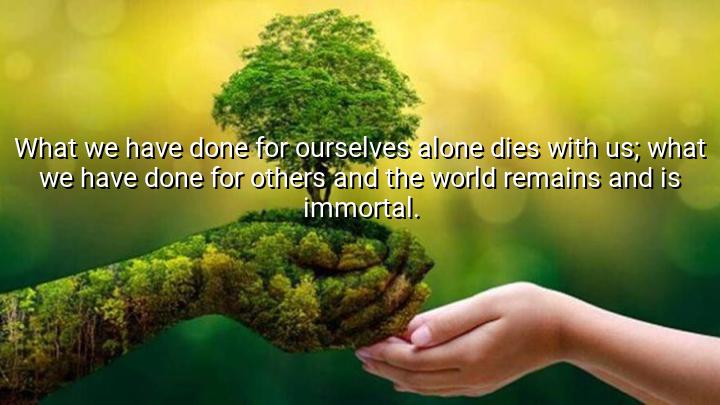




The quote "What we have done for ourselves alone dies with us; what we have done for others and the world remains and is immortal" by Albert Pike reflects the idea that selfishness is fleeting, while selflessness and service leave a lasting legacy. Pike suggests that the things we do purely for our own benefit or pleasure are temporary and perish with us, but actions aimed at benefiting others or contributing to the greater good continue to impact the world long after we are gone. In this sense, true immortality lies not in personal achievements, but in how we affect others and the world around us.
Albert Pike, an American lawyer, military officer, and Masonic scholar, was known for his philosophical and ethical writings, especially on moral and spiritual matters. Pike’s quote encourages individuals to consider the long-term impact of their actions, urging them to focus on contributing to the well-being of others. It resonates with themes of altruism and humanitarianism, core values in both ethical philosophy and many religious teachings.
The phrase "what we have done for others and the world remains and is immortal" highlights the idea that legacy and impact are built on the foundation of kindness, generosity, and meaningful contributions to society. By helping others or improving the world, we create something that transcends our individual lives—something that continues to influence future generations, thereby making our actions immortal in a symbolic sense.
Ultimately, Pike’s quote is a reminder that the value of our lives is not determined solely by our personal success or wealth, but by the lasting contributions we make to the collective good. It challenges us to prioritize compassion, generosity, and community over selfish pursuits, knowing that what we give to others is the legacy that endures beyond our time.

Nngankhanh
What strikes me about this quote is how it frames immortality—not as something mystical or religious, but as a social and moral concept. It’s not about living forever, but about being remembered through the good we do. Do you think this idea puts pressure on us to live ‘big’ lives, or does it encourage us to think more meaningfully about even the smallest ways we contribute to others?
LNNhat Linh Nguyen
This quote really speaks to the idea of legacy. It’s a powerful reminder that what we give outlives us. But it also makes me wonder—how much of what we do for others is remembered, and by whom? Is it enough to help one person deeply, or must our actions touch many to be considered ‘immortal’? I think there’s quiet heroism in small kindnesses that history may never record.
HDVu Phan Hoai Diem
I find this quote both beautiful and a bit idealistic. While I agree that service to others creates lasting meaning, is it fair to say that everything we do for ourselves dies with us? What about personal growth, creativity, or joy—don’t those things also ripple outward in unseen ways? Maybe the distinction between self-serving and selfless isn’t always so clear-cut.
TTTran Tam
This quote makes me think about the tension between self-care and service. In a world where we’re often told to ‘put yourself first,’ Pike’s words challenge that notion. But is it possible to give meaningfully to others if your own needs aren’t met? I’d love to know how we can balance doing things for ourselves and making a lasting impact on others at the same time.
HAHai Anh
There’s something very humbling about this quote. It suggests that our personal ambitions and pleasures fade, while our selfless acts endure. But is that always true? I wonder if people who quietly help others are ever truly remembered, or if only visible contributions get immortalized. It makes me question whether the world accurately honors those who serve behind the scenes.