

What a lovely surprise to finally discover how unlonely being alone can be.
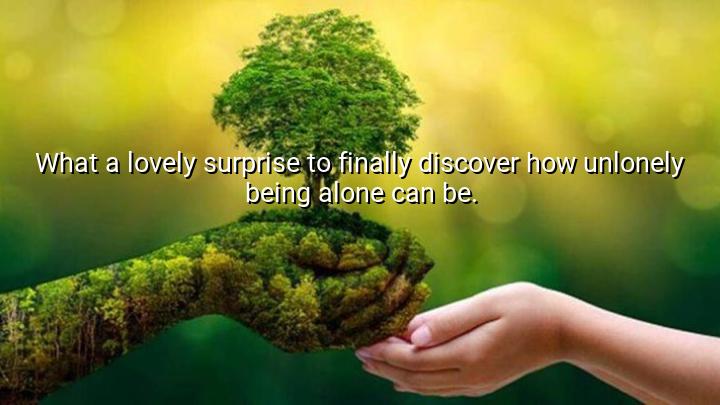




The quote "What a lovely surprise to finally discover how unlonely being alone can be" by Ellen Burstyn expresses a moment of joyful realization about the positive nature of solitude. Often, being alone is associated with loneliness, discomfort, or emotional emptiness. However, Burstyn reveals that solitude can be unexpectedly fulfilling, even liberating, once we allow ourselves to embrace it. This “lovely surprise” comes from shifting perspective—from fearing aloneness to appreciating its richness.
Ellen Burstyn, an award-winning actress known for her depth and emotional honesty, has spoken publicly about her journey through personal struggles, growth, and self-awareness. This quote likely stems from her reflections on life experience, particularly the empowerment that comes from learning to enjoy one’s own company. It highlights that emotional independence can lead to a greater sense of inner peace and self-acceptance.
The key phrase “how unlonely being alone can be” captures the paradox at the heart of the quote. It challenges the assumption that solitude must equal isolation or sadness. In truth, when we are comfortable with ourselves, solitude becomes a space of creativity, healing, and even joy. It’s a reminder that we can feel deeply connected to life and ourselves, even in the absence of others.
Ultimately, Burstyn’s words encourage us to reframe how we think about being alone. Rather than seeing it as something to escape, we can see it as a gift—a time for self-discovery and renewal. Her quote reassures us that solitude doesn't have to be a sign of emptiness; it can be a source of quiet contentment and strength.

DCDuong Ngoc Dieu Chau
I find this quote incredibly hopeful, but also a bit surprising. It almost flips everything I used to believe about being alone. Does everyone eventually reach this perspective if given time, or is it something that only comes after struggle? I’d love to know how people transition from fearing aloneness to embracing it. Is there a mindset shift or an emotional milestone that makes being alone feel like coming home?
KLPham Khanh Linh
Reading this quote made me reflect on how solitude can actually feel more full than certain social situations. Isn’t it strange how we can feel lonelier in a crowded room than in an empty one? Maybe solitude allows us to reconnect with parts of ourselves we forget when constantly around others. I wonder if there’s a specific moment that helps people realize this—like a trip, a loss, or just quiet time.
NNNha Nguyen
This quote is such a comforting reminder that solitude can be joyful and liberating. But I wonder—what role does intentionality play in this experience? Is being alone only fulfilling when it’s chosen, not forced? I think a lot of people confuse being alone with rejection or lack. How do we reframe solitude as a gift rather than something to escape? That seems like a lesson we all need at some point.
BGAFK Mvp ban ga
Burstyn’s words resonate so deeply—it’s almost like reclaiming a misunderstood state of being. Still, I’m curious: does this comfort in solitude come from emotional maturity, or is it circumstantial? For example, would someone younger or more extroverted feel the same sense of unloneliness in solitude? Or is this a mindset we grow into? I’d love to explore how personality and life stage affect our relationship with being alone.
VPVan Pham
I love the idea of aloneness feeling like a 'lovely surprise' rather than something to fear. But part of me wants to ask—how do we teach people to embrace solitude without making them feel like they’re missing out on connection? In a world obsessed with social engagement, is this kind of discovery something most people stumble into only after hardship or heartbreak? It’s beautiful, but it feels rare too.