

We're all outsiders in a way. We're all alone and can become very lonely.
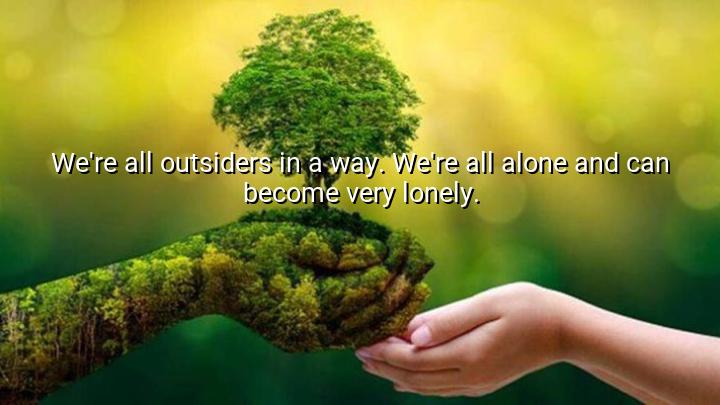




The quote "We're all outsiders in a way. We're all alone and can become very lonely." by Hugo Weaving reflects on the universal experience of alienation and isolation. Weaving suggests that, at some level, everyone feels like an outsider—whether due to personal struggles, differences from others, or the simple nature of human experience. This sense of being on the outside looking in can lead to feelings of loneliness, even when we are surrounded by others, highlighting the complexity of human connection.
Weaving’s words also address the emotional side of human existence, where despite being part of society, individuals can often feel disconnected from the world around them. The quote speaks to the psychological reality that everyone can experience moments of deep solitude, regardless of their circumstances. The feeling of being alone can sometimes be a natural part of the human condition, making us realize that loneliness is not always about physical absence but often an emotional or existential experience.
Additionally, Weaving's reflection on loneliness suggests that it is a shared experience, one that connects all people across different backgrounds. By acknowledging that everyone feels like an outsider at times, the quote encourages empathy and understanding, reminding us that connection is something we all seek, yet can struggle to find in meaningful ways. It highlights the need for support and community in addressing these common human feelings.
The origin of this quote comes from Hugo Weaving, an Australian actor known for his roles in iconic films such as The Matrix and The Lord of the Rings trilogy. Weaving’s reflection on outsiderness and loneliness might stem from his deep understanding of the complex characters he portrays, often representing individuals who feel alienated or out of place. His words offer a poignant commentary on the shared nature of these universal human experiences.

GDGold D.dragon
Hugo Weaving’s insight prompts me to consider how early experiences shape our sense of belonging and loneliness. Can childhood socialization or trauma influence lifelong feelings of being an outsider? Understanding this might help develop more compassionate approaches to mental health and social integration.
MTMai Trang
This quote invites reflection on the ways people cope with feeling like outsiders. Are there healthy strategies that help transform loneliness into self-discovery or creativity? How can communities create spaces where outsiders feel seen and valued rather than marginalized?
TOtiktok official
Weaving’s words raise questions about how modern life, with its digital connectivity yet physical separation, influences our experience of loneliness and outsider-ness. Does technology help bridge these gaps, or does it sometimes deepen the sense of isolation? It’s a complex interplay worth exploring.
VLDang vat long
Reading this, I’m struck by how loneliness and being an outsider are often stigmatized. Could normalizing these feelings encourage more open conversations about mental health and social inclusion? What role do cultural and societal factors play in shaping our perceptions of solitude and connection?
QMNguyen Quan Minh
This quote makes me think about the tension between individuality and connection. If we are all alone in some fundamental way, how do we reconcile that with our need for belonging? Can recognizing that loneliness is a common human condition change how we support each other emotionally and socially?