

We need leaders who are able to vividly remember how it feels to experience hardship, trauma and pain, who make us feel less alone.
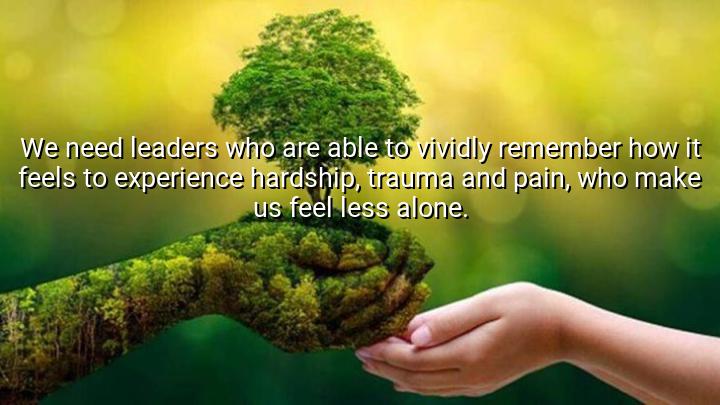




The quote "We need leaders who are able to vividly remember how it feels to experience hardship, trauma, and pain, who make us feel less alone." by Stephanie Land emphasizes the importance of empathy and personal experience in effective leadership. Land suggests that true leaders should have a deep, personal understanding of what it feels like to endure difficult and challenging experiences, such as hardship or trauma. This understanding allows them to connect with others who are suffering and create a sense of solidarity. Leaders who can relate to the struggles of others are better equipped to lead with compassion and insight.
Land's statement also stresses the role of empathy in leadership. A leader who has experienced hardship and pain can be more vulnerable and authentic, making their actions and decisions more relatable and human. When people feel that their leaders understand their struggles, they are more likely to feel supported and less alone. This fosters a sense of community and reassurance, making the leadership more effective and impactful.
Furthermore, the quote suggests that leadership is not about being distant or detached from the difficulties of the people you lead. Empathetic leaders recognize that their ability to understand and share in the emotional experiences of others strengthens their ability to provide support and solutions. By remembering what it's like to face adversity, they are more likely to make decisions that consider the human experience, rather than being overly focused on strategy or policy.
The origin of this quote comes from Stephanie Land, an American author known for her memoir Maid: Hard Work, Low Pay, and a Mother’s Will to Survive, in which she shares her personal journey through poverty and the struggles of working as a house cleaner. Land's experiences with hardship and resilience inform her understanding of leadership, and her words reflect the belief that personal connection and empathy are essential qualities for anyone in a position of power or influence.

NDNguyen Ngo Duc
This quote invites reflection on the emotional burden leaders carry. How do leaders cope with reliving or confronting collective trauma while remaining strong for their people? Could this lead to burnout, or does it motivate compassionate governance? What support systems exist to help leaders maintain this balance?
DLDieu Lih
I’m curious about how this perspective applies in different cultural contexts. Do some societies prioritize empathetic leadership more than others? How do cultural expectations shape what qualities we value in our leaders? Could emphasizing shared human experience foster greater trust and cooperation between leaders and communities?
NTNguyen Ngoc Thang
This statement raises questions about the selection and training of leaders. Should personal experience with hardship be a criterion for leadership roles? Or could it risk excluding qualified individuals who haven’t faced such challenges? How do we ensure leaders stay connected to the realities of those they serve throughout their tenure?
MTMai Thanh
I really resonate with the idea that leaders should make us feel less alone in our struggles. How can leaders demonstrate this kind of emotional connection without compromising their authority? Are there examples of political or community leaders who have successfully balanced empathy with effective decision-making?
GNGiang Nguyen
This quote highlights the importance of empathy in leadership, suggesting that leaders who understand hardship can better connect with people. But how often do we see leaders who truly remember their struggles rather than becoming detached? Can empathy be taught, or is it something innate? How might such empathetic leadership change policies and the way governments address social issues?