

This is the highest wisdom that I own; freedom and life are earned by those alone who conquer them each day anew.
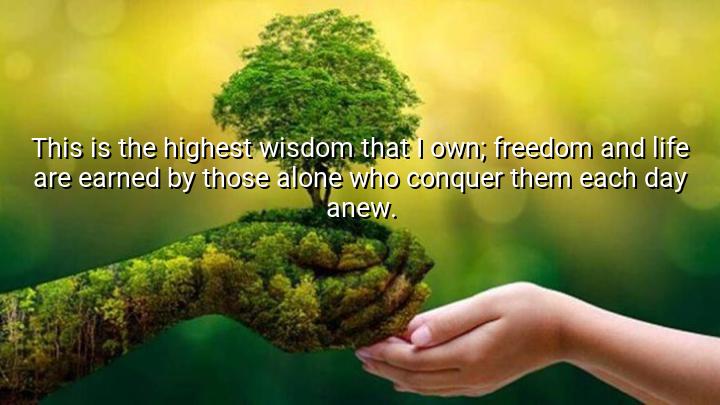




The quote "This is the highest wisdom that I own; freedom and life are earned by those alone who conquer them each day anew" is from Johann Wolfgang von Goethe, a renowned German writer, philosopher, and statesman. In this statement, Goethe reflects on the idea that freedom and life are not simply granted or inherent, but must be actively earned through continuous effort. The phrase "conquer them each day anew" suggests that achieving and maintaining a fulfilling life and freedom requires constant attention, determination, and self-discipline.
Goethe’s words convey that true wisdom involves understanding that life and freedom are not one-time achievements, but ongoing processes. The idea of conquering them daily implies that individuals must consistently make conscious decisions to live freely and to live well, despite the obstacles or challenges that may arise. This perspective encourages a proactive approach to personal growth and responsibility, rather than passively accepting life as it comes.
The phrase "each day anew" further emphasizes the renewal of effort required every single day. It acknowledges that freedom and a fulfilling life are not static states but are dependent on a constant commitment to the choices we make and the actions we take. This mindset aligns with Goethe’s broader philosophical ideas about the importance of personal agency and the need to actively engage with life in order to shape our own destinies.
In essence, Goethe’s quote highlights the ephemeral nature of freedom and life—they are not permanent gifts but achievements that must be continually earned. It encourages individuals to embrace the challenges and responsibilities of daily life, recognizing that by conquering each day, we actively create the freedom and the life we desire.

B904 Le Duy Bao 9A5
This idea really resonates with me—especially in the context of personal growth. It’s like Goethe is saying that we never 'arrive' spiritually or emotionally; we have to keep choosing life, meaning, and freedom each day. But I wonder—how do you stay motivated to keep fighting for those things when life feels stagnant or crushing? What fuels the strength to start over daily?
MVMinh Vo
There’s something deeply humbling about this quote. It suggests that nothing is guaranteed—not even freedom or vitality. But is this daily conquest something everyone has equal opportunity to pursue? What about those facing systemic barriers or chronic hardship? Does the quote still apply, or does it assume a level of privilege or stability not everyone has access to?
NTDung Nguyen Thuy
This quote makes me reflect on the balance between gratitude and effort. If life and freedom must be continually earned, does that mean rest or complacency is dangerous? How do we distinguish between healthy discipline and toxic productivity in trying to live by this wisdom? It feels both motivating and a little overwhelming at the same time.
TNtrang nghiem
I love how Goethe frames the pursuit of life and freedom as an active, daily conquest. But I can’t help wondering—doesn’t that mindset risk leading to burnout? Is it healthy to feel like we have to earn our existence every single day? Or is he speaking more to a spiritual and psychological renewal rather than constant external striving?
MNnguyen minh nhat
This quote feels incredibly powerful—it reframes freedom and life not as permanent states, but as ongoing efforts. Do you think this idea holds up in today’s world, where many people seek security and permanence? It makes me question whether we’re too quick to assume we’ve 'arrived' at something lasting, rather than seeing life as a series of daily battles for purpose and agency.