

There is no such thing as darkness; only a failure to see.
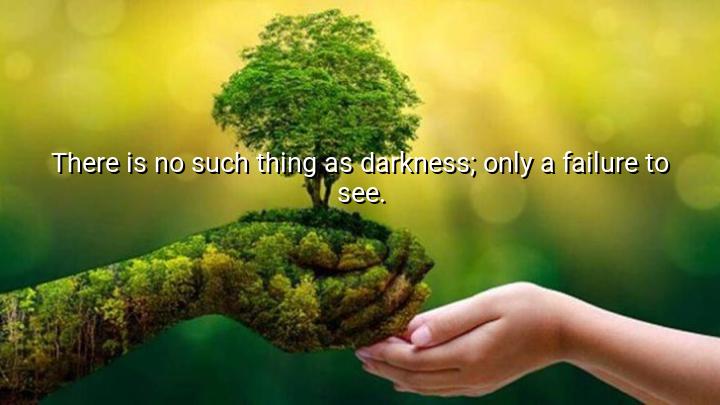




Malcolm Muggeridge’s quote, “There is no such thing as darkness; only a failure to see,” explores the concept that darkness is not a tangible entity, but rather a result of a lack of perception or understanding. He suggests that what we often call darkness is simply a moment when we fail to recognize the light or truth around us. This perspective encourages individuals to shift their focus from the absence of light to the ability to perceive and comprehend what is in front of them.
The quote aligns with Muggeridge's broader views on human nature and society, where he often explored themes of blindness to truth, faith, and enlightenment. As a journalist and social commentator, Muggeridge had a sharp insight into the contradictions and limitations of human understanding. By suggesting that darkness is only a failure to see, he highlights the importance of awareness, perspective, and clarity in navigating life's challenges.
In a philosophical sense, Muggeridge’s quote can be interpreted as a call to look beyond surface-level appearances and embrace a deeper understanding of the world. It challenges the idea that life’s difficulties or confusing moments are purely negative, and instead proposes that they are simply opportunities for growth and expanded awareness. When we fail to see the truth, it is not that the truth is absent, but that we are not yet in a position to perceive it clearly.
Ultimately, the quote encourages a shift in mindset, urging us to see that darkness is not something that exists independently but is a product of our inability to perceive the light of understanding, wisdom, or clarity. It suggests that enlightenment and insight are always available to us, and it is our responsibility to cultivate the ability to see and embrace them.

AAdministratorAdministrator
Welcome, honored guests. Please leave a comment, we will respond soon