

A failure is not always a mistake, it may simply be the best one can do under the circumstances. The real mistake is to stop trying.
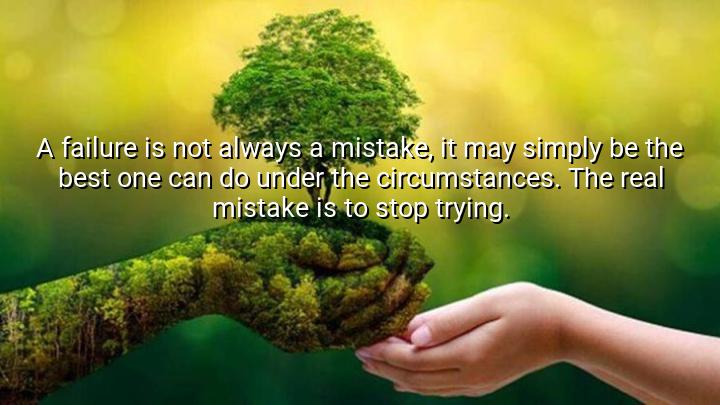




B. F. Skinner’s quote, "A failure is not always a mistake, it may simply be the best one can do under the circumstances. The real mistake is to stop trying," suggests a nuanced perspective on failure. Skinner argues that failure should not always be viewed as a flaw or error, but rather as a result of doing the best one can given the situation. The circumstances at the time may have limited the outcome, and what may appear to be a failure could actually be the best possible result under those conditions.
Skinner’s quote also highlights the idea that failure is not the true problem—giving up is. The "real mistake," according to Skinner, is not failure itself but the decision to stop trying. Persistence and continued effort, even in the face of failure, are what ultimately lead to success and growth. This mindset encourages people to keep striving and learning from their mistakes rather than allowing a setback to define them.
The idea of viewing failure as an opportunity rather than a definitive end is central to Skinner’s behavioral psychology theories. As a psychologist, Skinner believed in the power of reinforcement and that behaviors could be shaped through consistent effort and learning. His quote reinforces the importance of perseverance, suggesting that failure is part of the learning process and that one should never stop striving, regardless of setbacks.
The origin of this quote lies in Skinner’s work in psychology, particularly his studies on behavior and operant conditioning. Skinner’s approach to human behavior emphasized the importance of persistence and learning from mistakes, and this quote reflects his belief in the power of continued effort to drive progress and development. His emphasis on the importance of not giving up is rooted in his broader philosophy of how humans can adapt and thrive through consistent action and learning.

AAdministratorAdministrator
Welcome, honored guests. Please leave a comment, we will respond soon