

The Tao teaches us not to intervene and interfere. The things we love we have to learn to leave alone. And the people we love we have to learn to let them be.
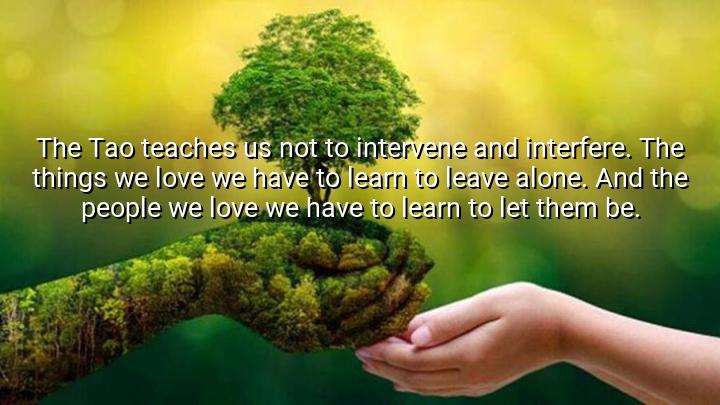




The quote "The Tao teaches us not to intervene and interfere. The things we love we have to learn to leave alone. And the people we love we have to learn to let them be." by Wayne Dyer draws from the ancient wisdom of Taoism, a philosophical and spiritual tradition that emphasizes living in harmony with the natural flow of the universe, known as the Tao. Dyer suggests that part of this harmony involves non-interference, meaning that we should not force or control the things or people we care about. Instead, we should allow them to evolve naturally, without imposing our will upon them.
Dyer’s message is about embracing acceptance and patience in relationships, both with things and people. When we love something, whether it is a passion, a project, or a person, we often feel the urge to control or change it. However, Dyer suggests that true love and respect come from letting go and allowing things to unfold on their own. This approach can lead to greater peace and contentment, as we stop resisting the natural course of events and instead accept things as they are.
The quote also speaks to the challenge of letting go of control in relationships. Loving someone, Dyer implies, doesn’t mean trying to change them or mold them into something else—it means respecting their autonomy and giving them the space to be themselves. This aligns with the Taoist principle of wu wei, which is often translated as "non-action" or "effortless action," suggesting that the best way to interact with the world is through gentle guidance rather than forceful interference.
The origin of this quote comes from Wayne Dyer, an American self-help author and motivational speaker. Dyer was known for his teachings on personal development, spirituality, and the importance of living in alignment with one's true self. This quote reflects his deep understanding of Taoism and its principles, which emphasize the balance between action and inaction, and the importance of allowing both ourselves and others to live in freedom and peace.

JMJi Mimi
This quote highlights the paradox of love: to truly care, we sometimes must release our grip. How does this idea resonate with experiences of heartbreak or letting go? Could embracing non-intervention lead to deeper connections by honoring individuality? It’s a beautiful, if challenging, invitation to rethink attachment.
NQDo Thi Nhu Quynh
Dyer’s words prompt reflection on our cultural tendencies toward control in relationships. Are we conditioned to believe that intervention equals caring? How might adopting a Taoist perspective foster more peaceful, trusting bonds? This makes me wonder about practical ways to practice non-interference without becoming passive.
LTNgoc Thuy Linh Tran
Reading this, I’m curious about how the idea of ‘letting them be’ applies to parenting or caregiving. Does this philosophy support independence and self-discovery, or could it risk neglect? It invites a nuanced discussion on how love manifests through both presence and respectful distance.
MTMy Tran
This quote makes me think about the tension between intervention and surrender in personal connections. When is it appropriate to step in, and when should we allow space for growth and autonomy? How might embracing the Taoist principle of non-interference transform how we relate to others and reduce conflict?
VTHoang Van Tuc
Wayne Dyer’s interpretation of the Tao challenges our instinct to control or change those we love. But how do we balance this non-intervention with the natural desire to help or protect loved ones? Is letting people ‘be’ an act of trust or detachment? It raises profound questions about the nature of love, freedom, and acceptance in relationships.