

The surest sign of age is loneliness.
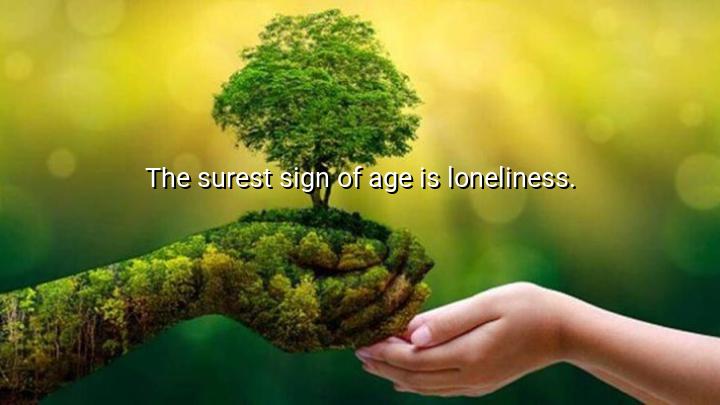




In this quote, Annie Dillard explores the emotional aspects of aging, particularly the idea that loneliness is a significant marker of getting older. She suggests that as people age, they may experience a growing sense of isolation, which becomes one of the most noticeable signs of age. Unlike the physical changes that are visible on the body, such as wrinkles or graying hair, loneliness can be a more subtle but profound indicator that a person is moving through the later stages of life.
Dillard’s statement highlights how, over time, people often experience the loss of loved ones, friends, and even personal connections as they grow older. The death of peers, family members, or the natural drift away from social networks can lead to a deep sense of isolation. This process often leaves the elderly feeling disconnected from the world around them, which can be emotionally challenging and difficult to endure. The quote underscores that social relationships are vital for emotional well-being, and their absence is a painful reminder of aging.
The quote also alludes to the psychological and emotional toll of loneliness. While physical aging is often accompanied by infirmity or decline, the sense of being alone can be even more devastating, affecting one’s sense of purpose and self-worth. Loneliness can strip a person of the emotional support and connection they once had, making it not just a sign of aging, but a burden that impacts one’s mental health and overall quality of life.
Ultimately, Dillard’s quote calls attention to the human need for connection, particularly as we age. It serves as a reminder that emotional health is just as important as physical health in the aging process, and that addressing loneliness in older adults is crucial for improving their quality of life. The absence of companionship can make the aging process more difficult, highlighting the importance of social networks and emotional support throughout life.

TBNguyen Thanh Binh
Dillard’s quote is beautifully melancholic, but it also feels like a call to action. If loneliness is such a vivid indicator of aging, shouldn’t we be doing more—individually and collectively—to address it? Whether through regular family interaction, volunteering, or mentorship programs, we need structures that keep older people emotionally connected. What are the best ways for younger generations to stay engaged with their elders in a meaningful way?
VLVy Lyly
Reading this makes me reflect on how we prepare—emotionally and socially—for aging. Do we cultivate enough meaningful relationships, or are we too caught up in the transient connections of youth? If loneliness is the surest sign of aging, how do we counteract that early? I think schools, workplaces, and communities should teach us not just how to succeed but how to build relationships that endure decades.
KQthcs thanh ha Nguyen kien quyet
There’s something profoundly sad and honest about this quote. It challenges the glorification of aging with grace and wisdom by reminding us of a darker undercurrent. But is loneliness a universal experience, or does it depend more on personality and life choices? Some older adults I know seem happier than ever. I wonder, is solitude always loneliness, or can it become a chosen, peaceful state as well?
NSpham ngoc sang
It’s such a sobering idea that loneliness, not wrinkles or illness, is the true marker of aging. It makes me think about how modern society often pushes the elderly to the margins. Are we unintentionally designing a culture that increases loneliness with age? I’d really like to understand what policies or community models have worked elsewhere to help elders remain socially engaged and emotionally fulfilled.
HNhan nguyen
Annie Dillard’s words are hauntingly accurate. We often associate age with physical decline, but the emotional side—particularly isolation—can be far more painful. Why do we neglect this in conversations about aging? Shouldn’t we place greater emphasis on creating support systems for seniors, not just care facilities? I'm curious: what role can technology or intergenerational living play in bridging the loneliness gap?