

Men are like wine - some turn to vinegar, but the best improve with age.
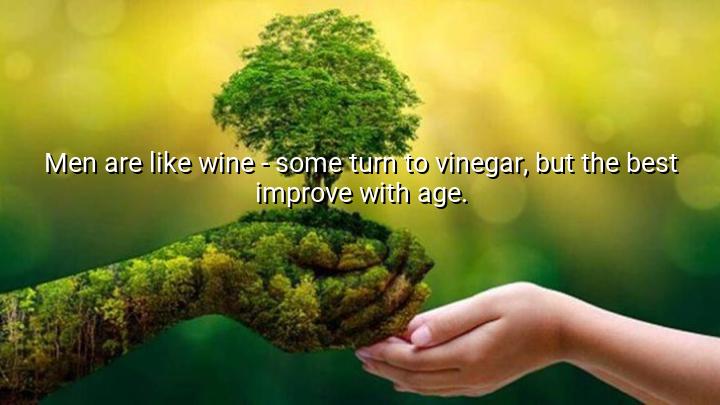




The quote "Men are like wine - some turn to vinegar, but the best improve with age," by Pope John XXIII, draws a comparison between human nature and the aging process of wine. It suggests that, just like wine, people can either become better or worse as they grow older. Some individuals may lose their vitality and character with time, becoming bitter or cynical, symbolized by the turning into vinegar. In contrast, others mature and grow wiser, becoming more refined and valuable as they age.
Pope John XXIII, known for his wisdom and leadership as the Pope, often used vivid metaphors to convey deep spiritual and moral lessons. This quote reflects his belief in the potential for personal growth and maturity over time. He emphasized that the best individuals continue to improve and develop their character, becoming more gracious, wise, and resilient as they age.
The phrase "the best improve with age" speaks to the idea that life experience can enhance a person's qualities, making them more compassionate, thoughtful, and understanding. It suggests that with age comes the opportunity to learn from mistakes, reflect, and cultivate virtues like patience and humility, leading to greater personal fulfillment.
Overall, the quote encourages individuals to embrace the aging process, suggesting that with time comes the potential for growth and improvement. It highlights the value of a life well-lived and the beauty of evolving into a person who embodies wisdom, grace, and maturity.

NHHong Nguyen Hai
This quote feels both charming and a little tragic. Not everyone improves with age, and sometimes that’s due to factors beyond their control—illness, isolation, trauma. It makes me wonder how much of a person’s ‘aging well’ is tied to their environment and support system. Can someone turn from vinegar back into wine with the right influences, or is it a one-way transformation? Is change still possible later in life?
KANgo Kim Anh
I laughed when I first read this, but now I'm reflecting—do we apply this idea to women too, or is it socially acceptable only when talking about men? There's often pressure on women to stay young or appealing, whereas men are praised for 'aging well.' I think this quote subtly highlights gendered expectations around aging and worth. Why is maturity in men romanticized while women face ageism much earlier in life?
YNPham Yen Nhi
This quote got me thinking about relationships. How do we know which 'wine' we're getting when we commit to someone? Is there a way to predict if someone will grow gracefully or become bitter with age? It feels like a gamble sometimes. I wonder if early traits are indicators of later behavior, or if big life events play a bigger role in shaping how people age emotionally and mentally.
HTHuyen Tran
I have mixed feelings about this quote. It’s clever, but I think it could unintentionally reinforce the idea that men are either destined to become better or worse over time, with no in-between. Life isn’t that black and white. I’d love to hear other perspectives—do you believe people naturally mature into better versions of themselves, or is that something that requires conscious effort and ongoing self-reflection?
BCNguyen Ngoc Bao Chau
It’s an interesting metaphor, but it makes me wonder if it places too much emphasis on aging as a value marker. What about younger people who are already kind, wise, and grounded? Do we assume they’ll only get better, or might they ‘sour’ too? And on the flip side, do older individuals get a free pass for poor behavior just because of their age or experience? Aging doesn’t always guarantee improvement.