

Eskimo: 'If I did not know about God and sin, would I go to hell?' Priest: 'No, not if you did not know.' Eskimo: 'Then why did you tell me?'
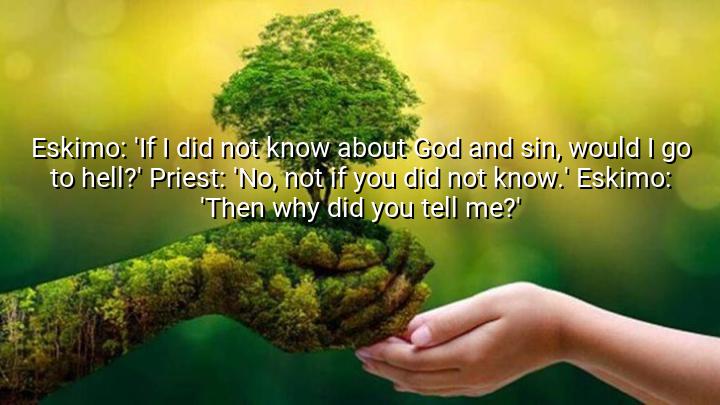




The quote by Annie Dillard, "Eskimo: 'If I did not know about God and sin, would I go to hell?' Priest: 'No, not if you did not know.' Eskimo: 'Then why did you tell me?'" raises profound questions about knowledge, guilt, and the consequences of introducing religious teachings to those who were previously unaware of them. The Eskimo's response highlights a dilemma about the responsibility of those who spread religious beliefs. If ignorance can shield someone from punishment, the Eskimo is questioning why the priest would reveal such concepts, knowing that it might bring consequences or guilt upon the individual.
This exchange reflects the tension between ignorance as a form of protection and the potentially burdensome nature of religious knowledge. The Eskimo seems to express that, without being informed about sin and hell, they would have been spared from the moral dilemmas or fears that the priest's teachings now bring. The Eskimo's logical question underscores the complexity of spiritual responsibility and how the introduction of such knowledge can alter a person's peace and view of the world.
The origin of this quote is from Annie Dillard, an American author known for her works that explore themes of nature, spirituality, and existential questions. Dillard often addresses the complexities of human understanding and belief in the context of the natural world and religion. Through this exchange, she highlights the paradox of spiritual knowledge and the unintended consequences that come with awakening people to new doctrines or truths.
Ultimately, Dillard’s quote encourages reflection on the burden of knowledge and the responsibility that comes with teaching others about spiritual matters. The Eskimo’s question serves as a critique of how the introduction of religious concepts can sometimes lead to feelings of guilt, fear, or confusion, especially when individuals were previously unaware of such ideas. The quote challenges readers to consider whether certain truths should be shared, given the emotional or psychological impact they may have on others.

AAdministratorAdministrator
Welcome, honored guests. Please leave a comment, we will respond soon