

The struggle alone pleases us, not the victory.
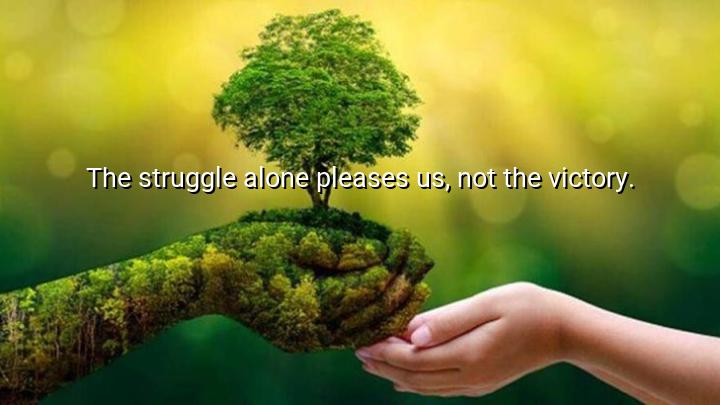




The quote "The struggle alone pleases us, not the victory." by Blaise Pascal reflects on the human condition and the intrinsic value of pursuit and effort rather than the final outcome. Pascal suggests that people often find more satisfaction in the struggle or challenge of achieving something, rather than in the actual victory itself. This implies that the process of overcoming obstacles, confronting difficulties, and engaging in meaningful effort is what brings true fulfillment, rather than the simple achievement of a goal.
Pascal’s statement speaks to the psychological aspect of human motivation, suggesting that the journey and the growth experienced through challenges are more rewarding than the end result. Once a goal is achieved, the satisfaction tends to be fleeting, but the satisfaction gained from facing struggle and adversity is often more enduring. The quote aligns with the idea that striving toward something, learning through hardship, and developing resilience are central to a meaningful and fulfilling life.
This quote also suggests a deeper philosophical reflection on contentment and human nature. Pascal implies that the human desire for progress and improvement is often driven by the joy found in the effort itself rather than the reward. The sense of accomplishment is not merely tied to the victory but to the effort, persistence, and personal growth that come with the struggle.
The origin of this quote comes from Blaise Pascal, a French mathematician, physicist, and philosopher. Known for his work in probability theory and his philosophical reflections on the human experience, Pascal’s thoughts often delved into the nature of human suffering, joy, and existential meaning. This quote encapsulates his view of life as a series of struggles and challenges, with the true reward lying not in the final triumph but in the effort and growth experienced along the way.

NMNhat Minh
The statement raises questions about the nature of fulfillment. If victory doesn’t bring as much pleasure as the struggle, does that mean our goals are just milestones rather than endpoints? How do we reconcile the desire for achievement with the appreciation of effort? I’d love to discuss whether this perspective can help people find more meaning in everyday challenges.
NPNhan Pahm
This quote makes me think about the role of struggle in creativity and innovation. Are artists, inventors, or athletes drawn more to the challenge itself than to recognition or success? How does embracing struggle shape our identity and self-worth? I’m curious if there’s a cultural or philosophical tradition that particularly emphasizes this view of pleasure in struggle.
ANAT N
Reading this, I wonder about the emotional and psychological rewards of struggle. Could it be that struggle provides a sense of purpose and engagement that victory alone cannot? How might this idea influence how we deal with failure or setbacks? Also, does this suggest that we should seek out challenges deliberately to find satisfaction in life?
NVNguyen Nguyen Van
I find this idea both inspiring and a bit paradoxical. If the struggle is what pleases us, why do so many people focus so much on winning or finishing first? Is it possible that the pain and effort of struggle give meaning to our achievements, or does this mindset risk glorifying suffering? I’d like to explore how this concept applies to personal growth and resilience.
LTLinh Tran
This quote challenges the common notion that success or victory is the ultimate reward. Do you think that the process of striving and overcoming obstacles can be more fulfilling than achieving the goal itself? How does this perspective affect our motivation and mindset? Could it imply that the journey shapes us more than the destination, and if so, how can we cultivate appreciation for struggle without becoming discouraged?