

The spoken word is man's physician in grief. For this alone has soothing charms for the soul.
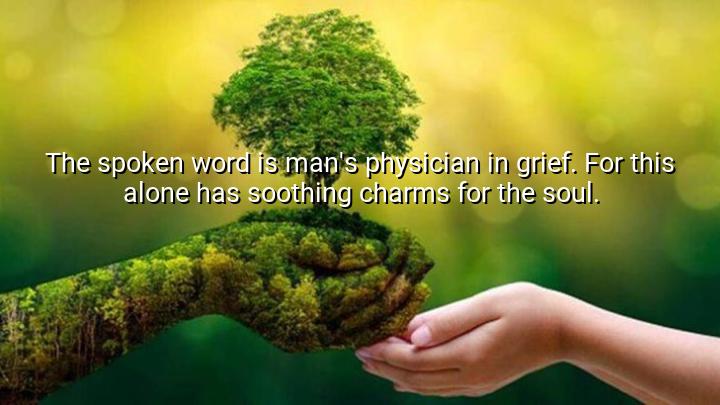




In this quote, Menander emphasizes the therapeutic power of the spoken word in times of grief. He suggests that, when faced with sorrow or emotional pain, words—especially those spoken by others—have a unique ability to offer comfort and healing. The idea is that the act of speaking, whether through conversation, counsel, or shared expression, serves as a form of emotional medicine, capable of soothing the soul and helping individuals cope with their pain.
Menander’s statement reflects the ancient Greek belief in the power of language and communication to not only convey ideas but also to influence emotional and psychological well-being. During times of grief, people often turn to others for support, and it is the exchange of comforting and empathetic words that can help alleviate feelings of isolation or despair. This highlights the healing potential that lies in human connection through verbal expression.
The phrase “soothing charms for the soul” suggests that words have a profound, almost magical ability to bring relief to emotional suffering. In the context of grief, the right words can provide reassurance, understanding, and comfort, offering a sense of connection and shared experience that can make emotional burdens feel more manageable. It’s a reminder that, in moments of hardship, sometimes the most valuable thing we can offer someone is our presence and the words we use to console and uplift.
Ultimately, Menander’s quote underscores the importance of communication in emotional healing, particularly in the face of loss and sorrow. It highlights the idea that the spoken word, when used thoughtfully and compassionately, can be a powerful tool for helping individuals navigate through pain, making it an essential aspect of human resilience and connection.

NHNguyen Hien
I’m drawn to the idea that words can function like medicine. It makes me think about how storytelling, poetry, or even casual conversation has helped me through hard times. But does this quote suggest that the spoken word is more effective than action or silence? For some, grief is processed through doing or being still. Is Menander elevating speech too much, or just emphasizing its often overlooked emotional power?
HHHy Hy
There’s something timeless in this quote. Long before therapy or self-help books, people found relief through talking. It’s almost instinctive. But do we still value spoken expression in the same way today? With so much digital communication, have we lost some of the healing power of true conversation? I wonder if texting or posting can offer the same 'physician' effect as voice, or if something essential is lost in translation.
THNguyen Thi Hang
This quote makes me reflect on how lonely grief can feel, and how speaking it aloud becomes a bridge back to others. But what about people who don’t have someone to talk to? Can the spoken word still heal if no one’s listening? Or is the act of speaking, even to ourselves or into the void, enough to begin soothing the soul? That’s a profound question about expression and isolation.
DNNguyen Dang Ninh
I really love the elegance of this thought. It reminds me how powerful language can be in connecting us during times of sorrow. But I also wonder—can the spoken word fail us too? What about those moments when words fall short, or when people say the wrong thing? Is the quote idealizing speech, or is it meant to highlight the intent behind it—empathy, presence, acknowledgment—as the true source of comfort?
VLVINH AN VONG LUONG
I find this quote both comforting and deeply insightful. There's something inherently therapeutic about voicing sorrow out loud—it makes the invisible pain real, and allows someone else to witness it. But why do we often resist talking when we're grieving the most? Is it pride, fear of burdening others, or just the struggle to find words for something so raw? It’s interesting how healing and vulnerability are so closely linked here.